
Imagination makes future present
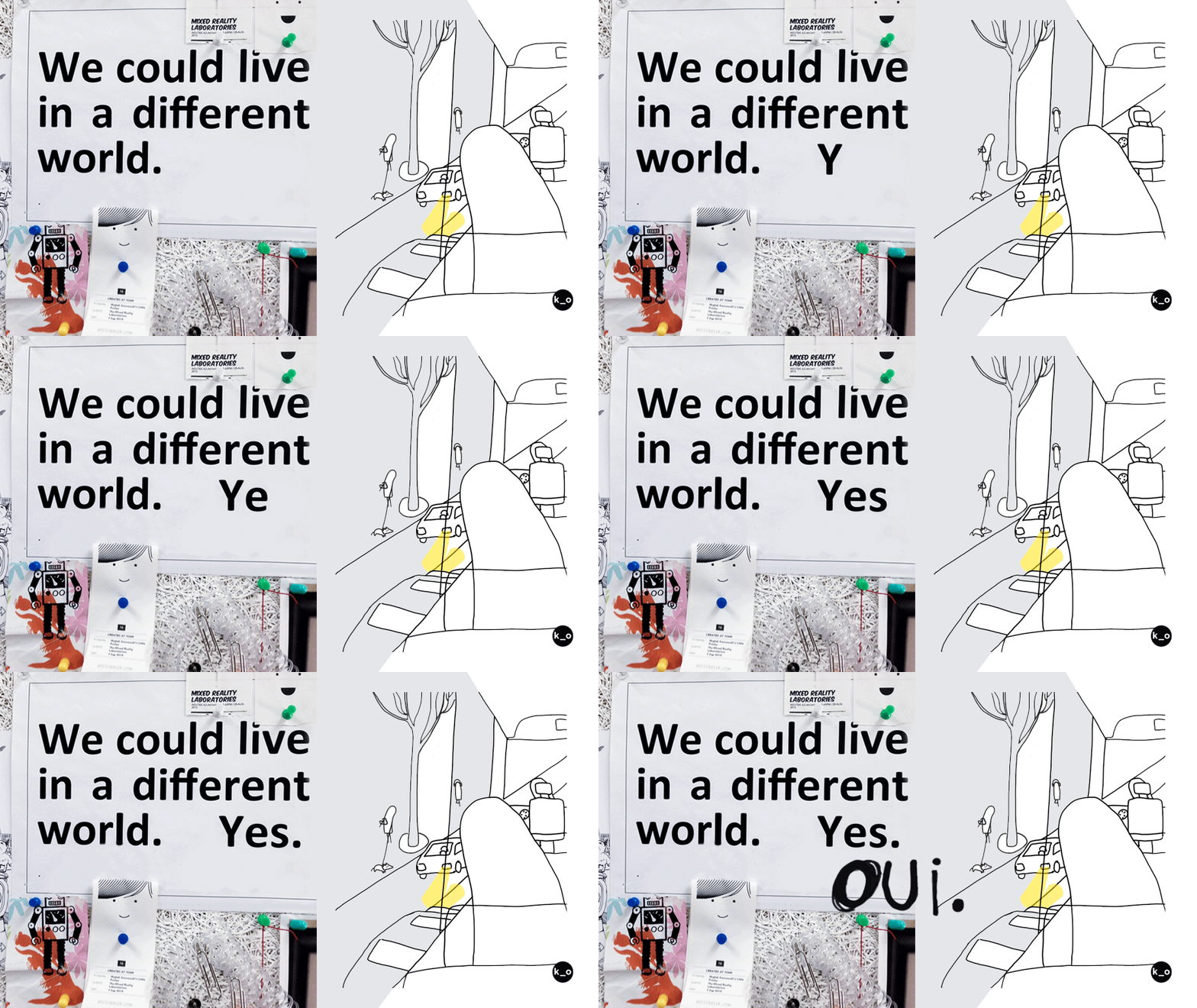
Imagination makes future present
Trusting your design imagination can feel lonely at the times.
There is a particular kind of resistance that arises when you propose something that hasn't happened yet.
Not resistance to bad ideas — that resistance is useful. This is something different: the resistance to ideas that are good but unfamiliar. The proposal that is met not with a counter-argument but with confusion. The design that requires its audience to briefly inhabit a world that doesn't yet exist.
Trusting your imagination through this resistance is the hardest part of design work. Not the hardest technically. The hardest existentially.
Because imagination is not evenly distributed. Most organizations are organized to optimize what already exists — to make the current thing better, faster, cheaper. Imagination, which proposes something that doesn't yet exist, is structurally uncomfortable.
And yet the alternative is to design only what the present allows.
To make the current interaction model more efficient. To refine rather than find.
In a moment when the relationship between people and AI is still being decided — when the patterns are forming, when the defaults are being set — designing only what the present allows is choosing the patterns that are already there. The command-line model. The task loop. The interface that waits and responds.
Imagination makes another future available, concretely enough to be evaluated. It is the threshold between what is and what could be.
Designers stand on that threshold. Sometimes alone. That is the position.
Imagination as strategic design process for interpreting the present, challenges our assumptions, and givens. Imagination opens the threshold between the now and the unexpected.
Almost any attempt to imagine that things could be different - especially if we reprioritize values of design situation - will face some kind of resistance.
Facing resistance can be frustrating and create doubt, insecurity and can feel lonely at the times. But facing this kind of resistance should be part of designers sensibility - and come along with a vision of new possibilities. When we realize that we have a choice, resistance can actually be exciting since it leads to ongoing learning and development.
When facing resistance we may also recognize that imagination is not evenly distributed. It’s why we largely live in the now.
Designers are on the threshold and imagination makes future present, as part of the context and active resource for design process.