
Social imagination
Social imagination
Every interaction pattern was invented by someone who was paying attention to some things and not others.
Every norm was once a novelty. Every behavioral script was written under specific conditions, for specific purposes, and could be written differently.
Social imagination is the capacity to see this — to look at a situation that has been normalized and ask what else it contains. As the careful, patient work of noticing what current design has organized out of view.
It is different from brainstorming, which produces volume. Social imagination produces specificity: one thing, in one situation, that was always possible and was not previously available. The sound bicycle bell on the car. The light that comes on for the stranger. The glow sent between people during illness.
These are not the results of blue-sky thinking. They are the results of looking at a situation closely enough that the surplus becomes visible.
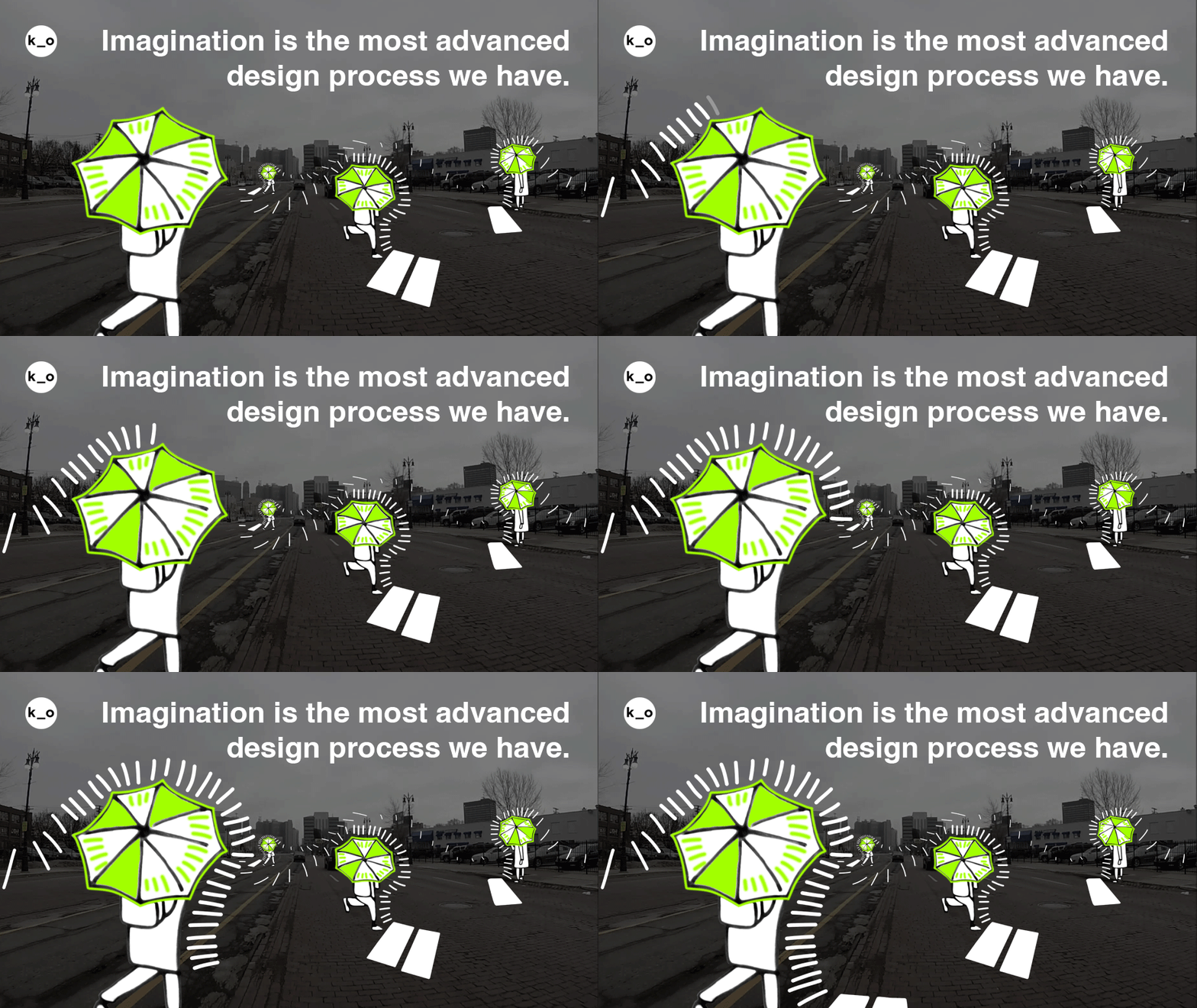
Imagination is the most advanced design method we have, because it works in the space before the solution has been named. It finds what is possible before the convention and template decides it.
Social imagination offers a disruptive perspective, a new organization of meaning, revealing new possibilities, roles, and relations through which products or systems can actively participate in shared human experience.
We apply imagination as strategic, transformative energy to reframe design situations toward the human dimension, seeking meaning in the new context of needs, values, and relations.
Social imagination is the most advanced design method we have to start putting this world back together in equitable and resilient ways.