
Everything else
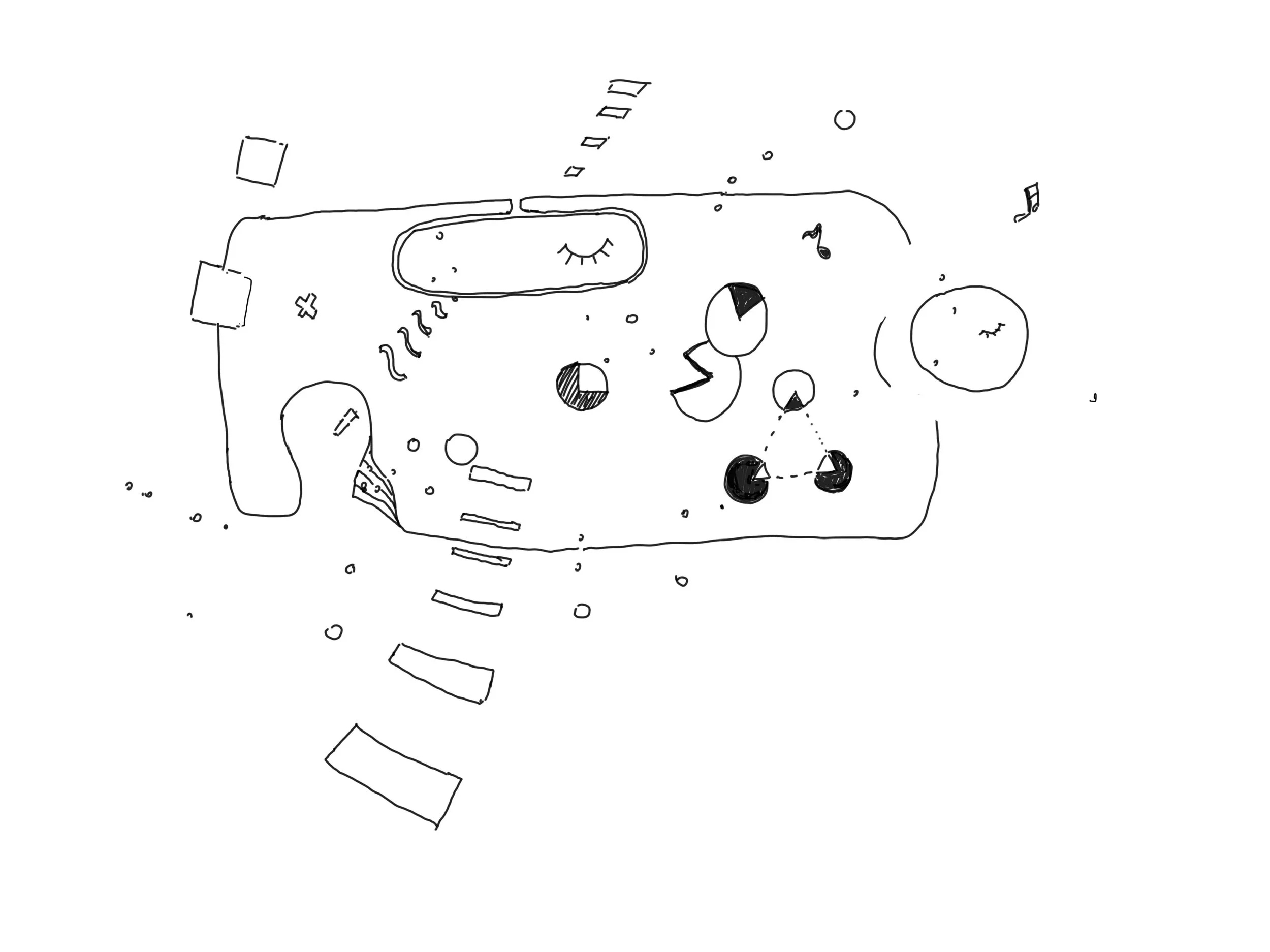
Every design process has a frame. Inside the frame: the task, the flow, the user, the goal. These are designed carefully. Tested. Iterated. Optimized until the friction is minimal and the completion rate is high.
Outside the frame: everything else.
The feeling of the interaction.
The relationship it creates over time. The social situation the system has entered. What it does to the person who lives with it, not just what it does for them.
Most of what matters to us lives outside the frame.
The frame was the right size when technology was a tool. You picked it up, completed a task, put it down. The interaction was bounded. Designing the task was designing the experience.
That is no longer the situation.
AI systems are continuously present. Connected platforms operate in the background of daily life. The vehicle is always on. The health system is always available. The assistant is always listening.
The interaction has no clear edges anymore. And a design practice organized around the task — the frame that was right for tools — is producing systems that are extraordinarily capable within that frame and almost entirely undesigned outside it.
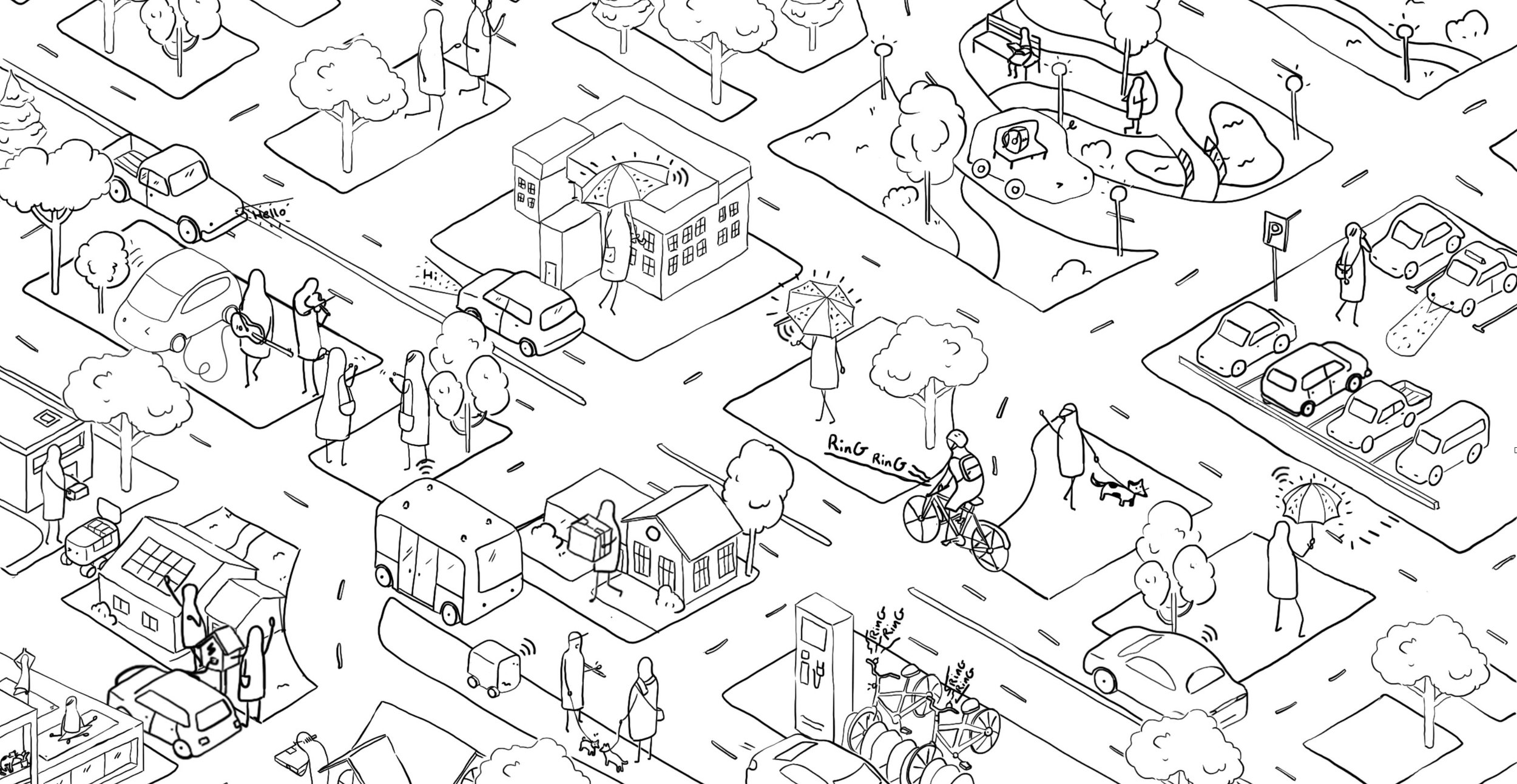
Outside the frame is where the relationship lives. The quality of being with the system over time. Whether it understands something about the situation it is in, or remains indifferent to everything except the stated request. Whether the experience is worth having — not just useful to have.
I have been curious what gets left when you design only the frame.
In connected vehicles: the social life of the parked fleet, the relationship between the car and the community it sits inside, the vocabulary of the road and what it communicates to the people sharing it.
In healthcare: the relational and emotional dimensions of treatment — the patient's sense of being held in someone's attention, the meaning-making that research consistently identifies as part of how people survive illness psychologically.
In public space: the surplus of encounter, attention, and connection that exists in every bus stop, every sidewalk, every shared square — and that current design walks past.
All of it is consequential. None of this is soft.
The question is whether it belongs in the design brief.
I think it is the design brief.