
A Continuing Atelier - a studio update
A Continuing Atelier
There is a gap in how technology gets designed.
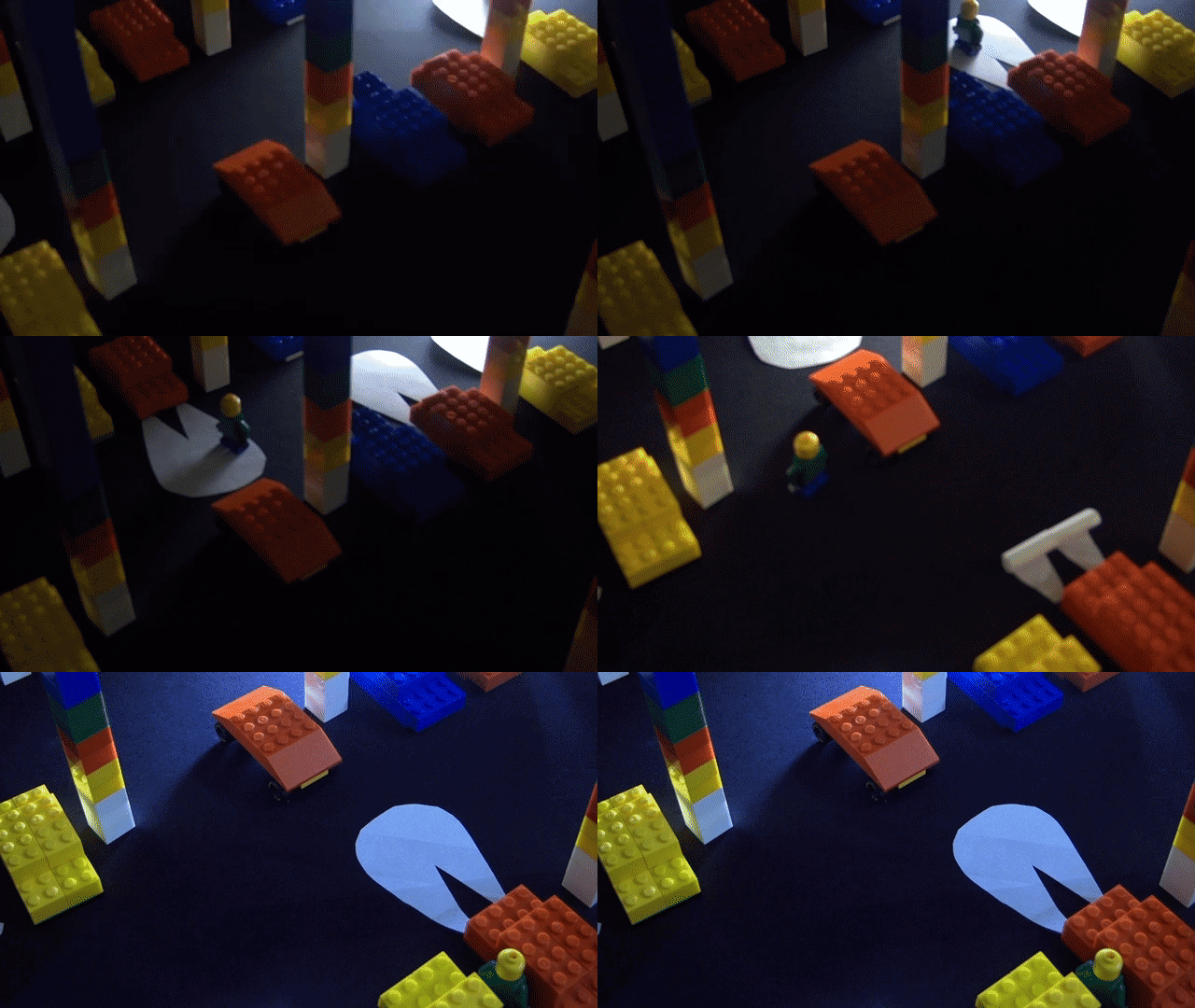
Most design processes optimize for what people do — the task, the flow, the conversion, the completion. What they leave undesigned is everything else: the feeling, the relation, the meaning. The human situation the technology is entering. The social life already present in the space the system is about to occupy. What it would mean for the system to notice that life, and to respond to it.
That gap is what Kinetic Optimism was built to work in.
The institutional years:
From 2016 to 2024, k_o operated as an embedded experience innovation studio — within first GTB/VML, in close and generative partnership with Ford Product Development. The work was not about how connected vehicles function.
It was about the emotional and relational situations they could invite.
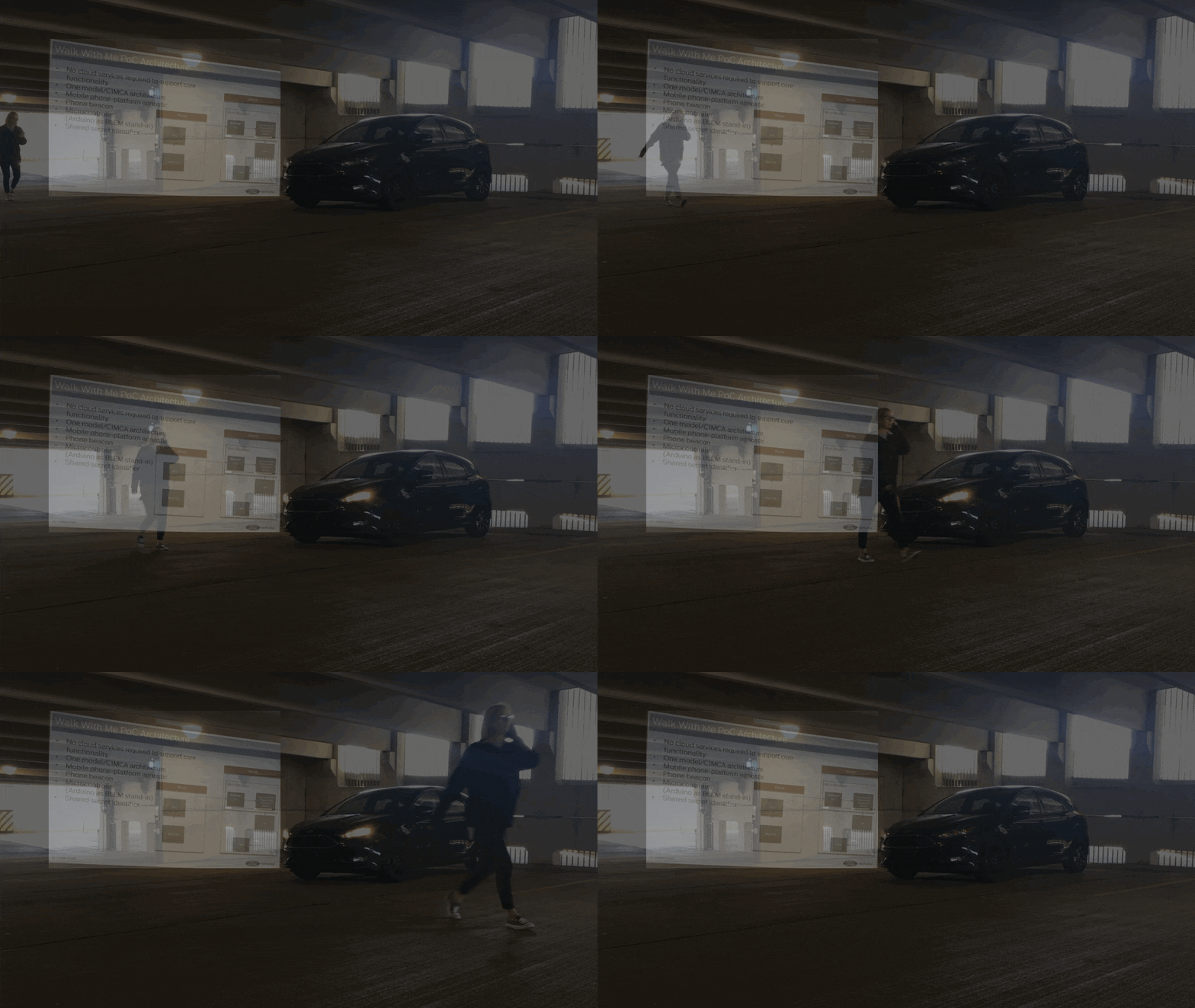
What a software-defined vehicle could do for the pedestrian walking past it at night.
Walk with Me is not a proposal for a product feature. It is a scene: a person walking through a dark parking structure at night, and a light coming on softly in front of them. The scene is specific. You can be inside it. You can feel whether it is right.
A driver behind a cyclist who wants to say I see you.
Someone in treatment who needs to feel held in another person's attention.
What the period of anticipation between ordering a car and receiving it could feel like if it were designed rather than managed.
What it would mean for a connected fleet to act as a civic resource rather than a collection of private assets.
The frameworks developed in that period — around resonance, the techno-social situation, and the surplus of social possibility in any connected system — constitute a design philosophy that was tested in real projects, shaped platform architecture, a joined US patent granted and multiple patent disclosures pending. These frameworks are not archived.
They continue to develop.
That partnership has now concluded. The institutional context has changed.
The questions have not.
What continues:
k_o is now an intellectual practice rather than an embedded commercial studio. This is a distinction worth making carefully.
Most design studios are defined by their deliverables. A studio exists to produce work for clients, in response to briefs, within timelines and budgets. The identity of the studio is partly its portfolio and partly its capacity to repeat that portfolio for new clients.
What k_o has always been is something different: an atelier of design thinking organized around a persistent inquiry. The institutional context — Room for More Possibilities at CP+B, and k_o at VML, in partnership with Ford — provided the material for the inquiry. Specific projects, specific constraints, specific technologies in specific moments of development. But the inquiry preceded each institutional context and continues after it.
The questions don't stop when the organizational structure changes.
They accumulate. They sharpen. They become more urgent.
Right now, they are urgent in ways they have never been.
Why this moment:
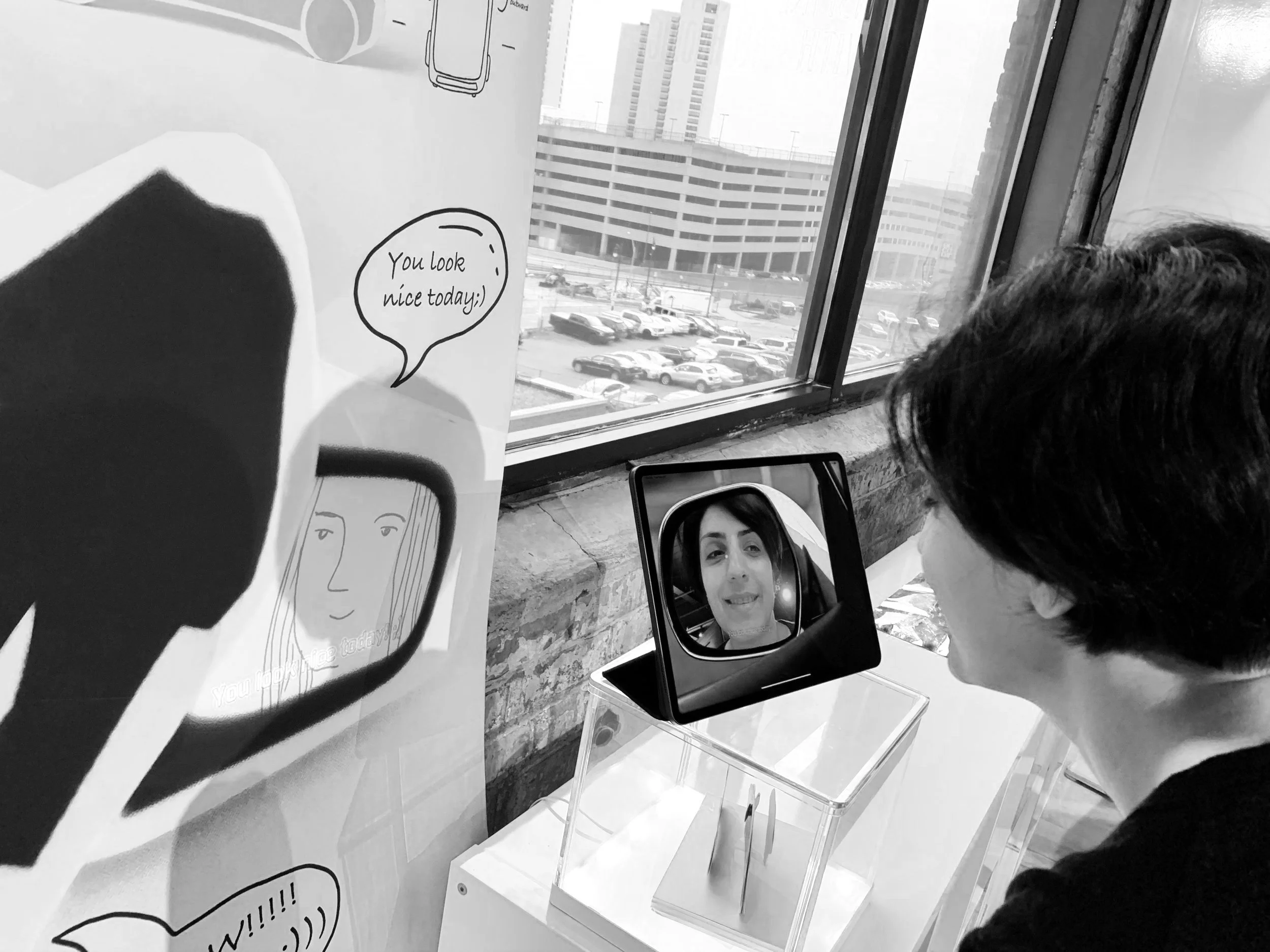
The relationship between people and AI is being designed right now, mostly without the design thinking that would ask the most important questions about it.
What kind of participant should this system be in the life of the person using it? What does it attend to?
What values does it embody in its behavior? What does it make possible that was not previously available — not in the transaction, but in the human situation the transaction is embedded in?
These are the questions the k_o frameworks are built to ask. The surplus of social possibility: what is already in this situation that current design has not found?
The techno-social situation: what social life is the system already inside, and what would it mean to respond to it?
Resonance: is this experience worth having — not useful to have, worth having? Expressive interaction: what would it mean for an AI system to attend to the full situation rather than only to the stated task?
These questions were developed in the context of connected vehicles and healthcare platforms. They are directly applicable to AI system design, to ambient computing, to any adaptive platform that is becoming a participant in daily life before anyone has fully asked what kind of participant it should be.
The frameworks travel. The inquiry continues.
Where we are looking:
k_o is an open atelier — a continuing mode of inquiry and concept prototyping, maintaining the intellectual practice because the practice is worth maintaining, and looking for the next context where this way of seeing finds its most useful home.
That context might be an organization building AI systems that wants a design partner who will ask the relationship questions before the interaction model solidifies. It might be a mobility company asking what the social layer of electrification should look like, designed intentionally rather than defaulted into. It might be a healthcare organization that wants to design for the full human experience of treatment, not only its clinical logistics. It might be a research partnership, an academic collaboration, an embedded residency, or a form that hasn't been named yet.
What we look for in any engagement is the moment before the category forms — when design can still shape the relationship, not just refine the interface. That is the window. That is where this practice is most useful and most alive.
The work shown on this site is the record of the inquiry to date: evidence of a point of view in motion, developed across real projects and continuing in response to a world that keeps changing the questions.
The inquiry is open. We are looking for what comes next.
If you are building in that space — or thinking about it — we would like to be in the conversation.