Electriquette
Design question: What if the social components of electrification were designed with the same intentionality as the technical ones?
Designing the social components of electric mobility — alongside the technical ones — as a single system.
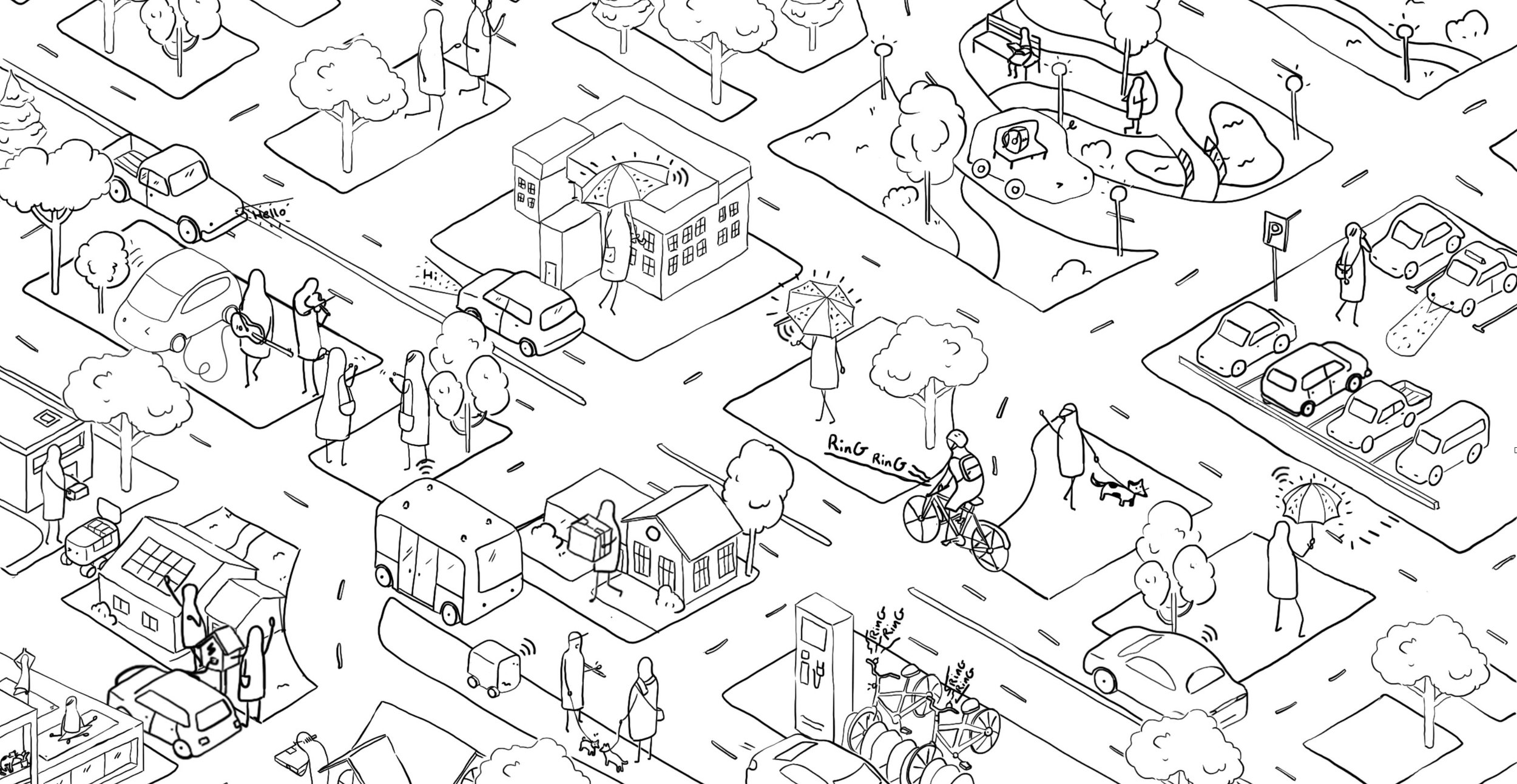
To foster adoption of Electrification, technology needs new forms of belonging in social practice.
A new technology arrives. People adopt it. The infrastructure follows. And at some point, new social norms emerge — how to behave around the technology, what it means to own it, how it changes relations between strangers.
With electrification, that social layer is still being written.
Electriquette is a design framework for writing it intentionally.
Every technology that has changed how people move through the world has also changed how people relate to each other in that world. The car created the traffic wave, the honking horn, the right-of-way negotiation, the nod between drivers of the same model. These social forms were not designed — they emerged. Some of them, like the horn, are blunt instruments that still carry the assumptions of a different era.
Electriquette asks: what if we designed the social layer of electric mobility from the start? Not as an afterthought, but as a design objective equal in seriousness to the engineering?
Electriquette - a sample of social software
We see electrification as adaptive, distributed system and opportunity to foster new forms of techno-social collaboration.

Walk with me - EV as benevolent community asset
The framework produced a set of experience propositions — each one a specific, inhabitable moment in the social life of an EV:
Walk With Me — parked vehicles lighting paths for pedestrians. Curious Mirror — the side mirror oriented toward the street rather than inward. Ring My Bell — a bicycle bell instead of a horn for car-to-cyclist communication. (US Patent granted.) Electro Wink — a greeting between two passing EVs. Free range umbrellas - re-casting pedestrains as source of mobility innovation. It's Going to Rain — fleet weather sensing shared with pedestrians as ambient sound. Free Little Electric Libraries — community-built charging stations that also make music and bubbles.
Taken together, these propositions make an argument: that the behavioral vocabulary of electric mobility can be designed to be civil, social, and community-oriented rather than inherited unchanged from internal combustion. The technology is capable of it. The design has not yet asked it to be.
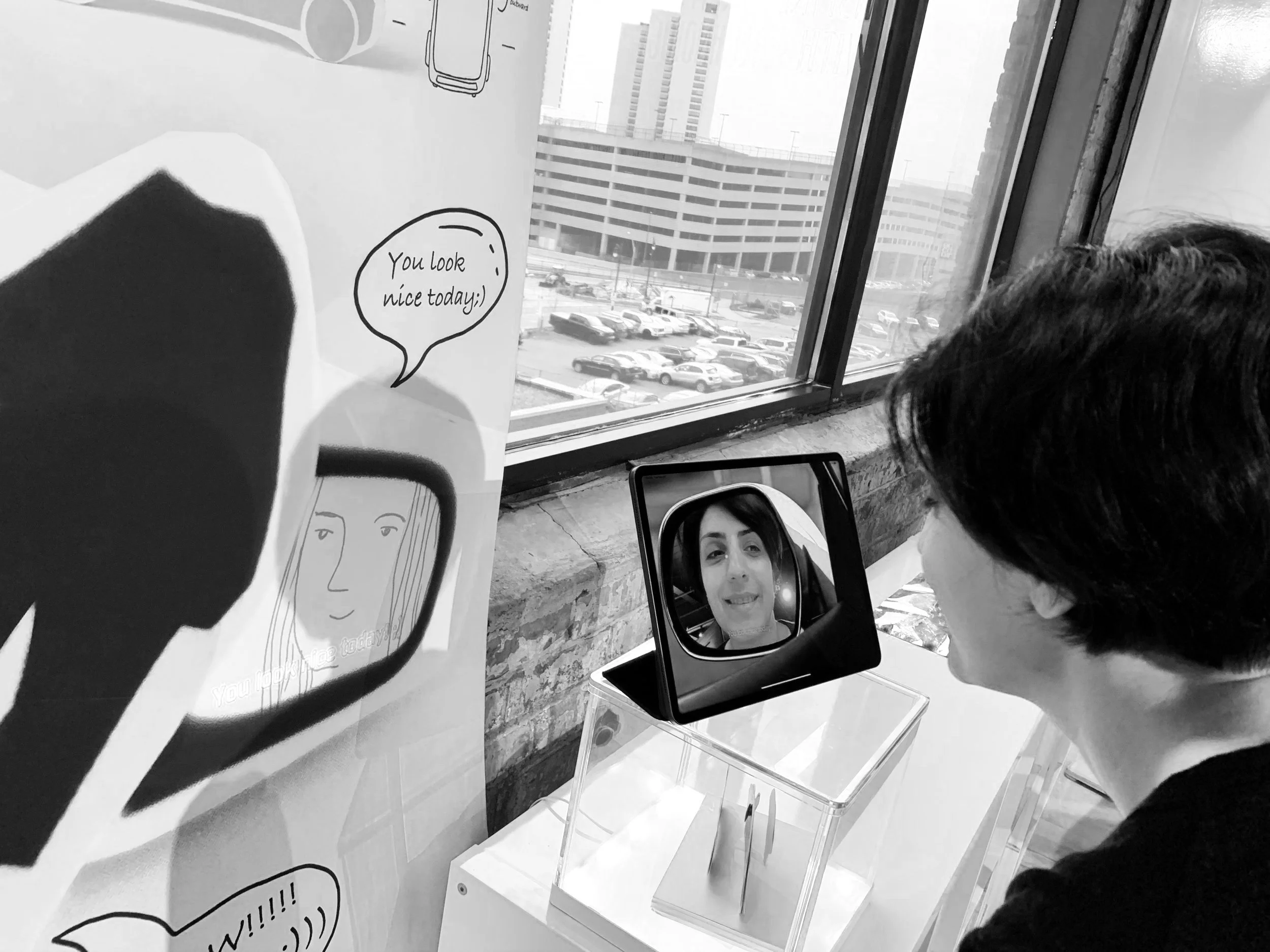
Curious mirror - inviting moments of meaningful unexpectedness and delight

Ring my bell - connected civility - technology as instigator of moments of benevolent social collaboration

Designing the social “components” together with the technical components as a strategically choreographed system

Electro_wink - designing for social affordances /aka civility

It’s going to rain - unlocking behavioral potential of EVs
Free range umbrellas - re-casting pedestrians as source of innovation in unfolding techno-social situations

Free little electric libraries - giving electrification a collaborative local dimension
Electrification is not just about technology but about a fresh set of values and new forms of benevolent techno-social collaboration.
Software Defined Vehicle invites new relations with the world around.
Electrification needs not only new technical infrastructure but also new forms of Social Infrastructure, new behavioral vocabulary, and new social signifiers.
Designing the social “components” together with the technical components as a systemic whole, to foster adoption of electrified mobility as social practice.
A repertoire of behavioral scripts translating values of new technology into evocative moments for people to explore through everyday practice.
What if electrification is an opportunity to re-imagine more benevolent and collaborative values of mobility?
Social innovation as a design strategy helps to move our thinking beyond the clichés of the industrial age and aggressive forms of last-century car culture and imagine new collaborative forms of our relationship with always-on, adaptive technology and with each other.