Free_range_umbrellas
“Strangers need strange moments together.” Making encounters slightly more possible.
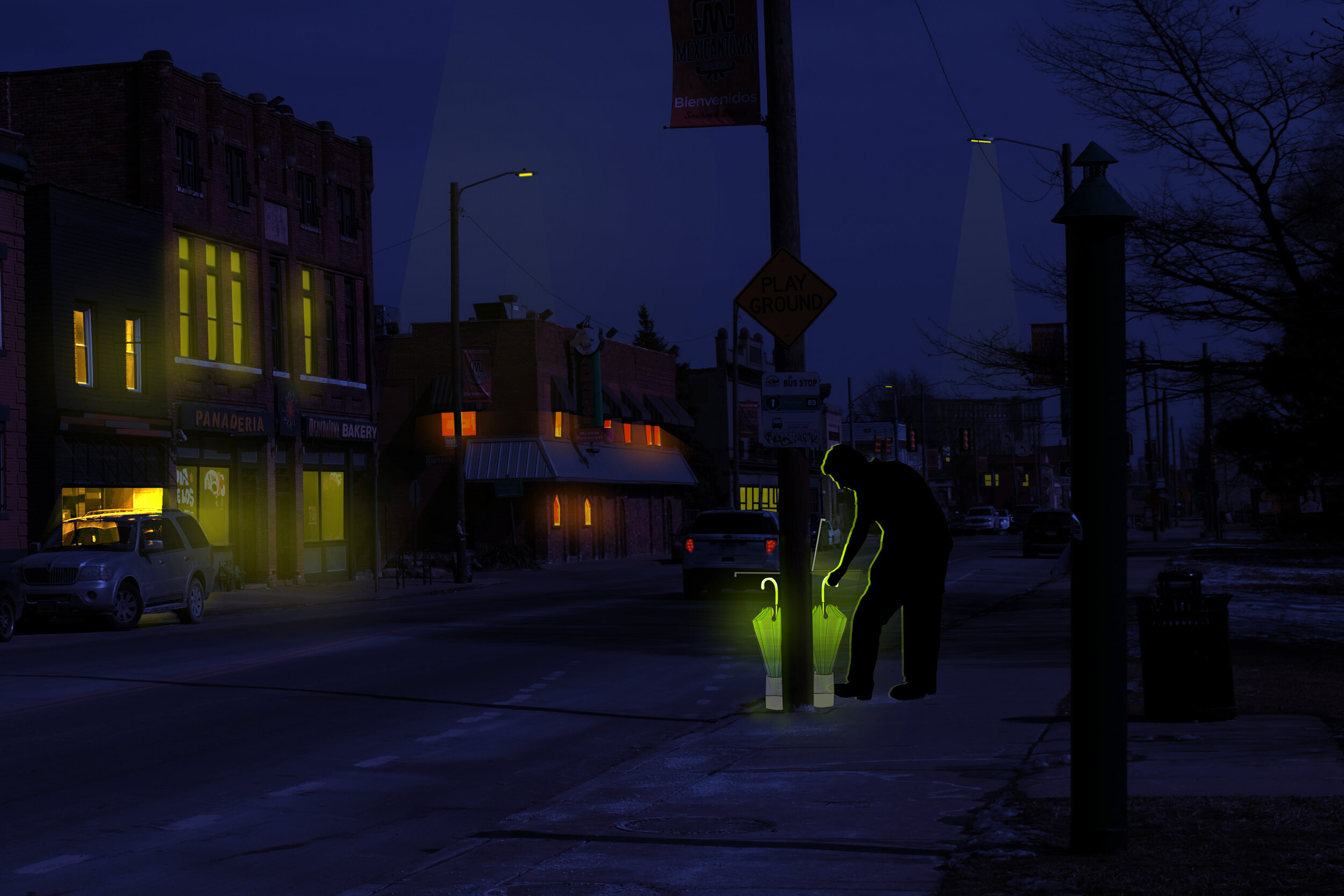
Luminescent umbrellas, placed on city blocks. Available for anyone to pick up and carry.
They are connected to each other. When two umbrellas come within range, their light patterns shift — a brief, wordless acknowledgment between two strangers who happen to be carrying the same thing. Walking with one makes your presence visible on the block. Passing someone else with one creates a small, unscripted event.

The umbrella has always been a social object. You share one with a stranger in the rain. You offer one at a doorway. Something about its shape — wide, covering, inviting proximity — makes the social gesture easy.

Kinesthetic response brings attention to other bodies in space, to their movements, and it encourages exploration of one’s own behavior as being affected by external mobility.
What would a city block feel like if it were designed to notice the people walking through it?
Walking is the most social form of mobility.
It puts bodies in shared space, at human speed, in proximity to each other.
It creates the conditions for encounter.
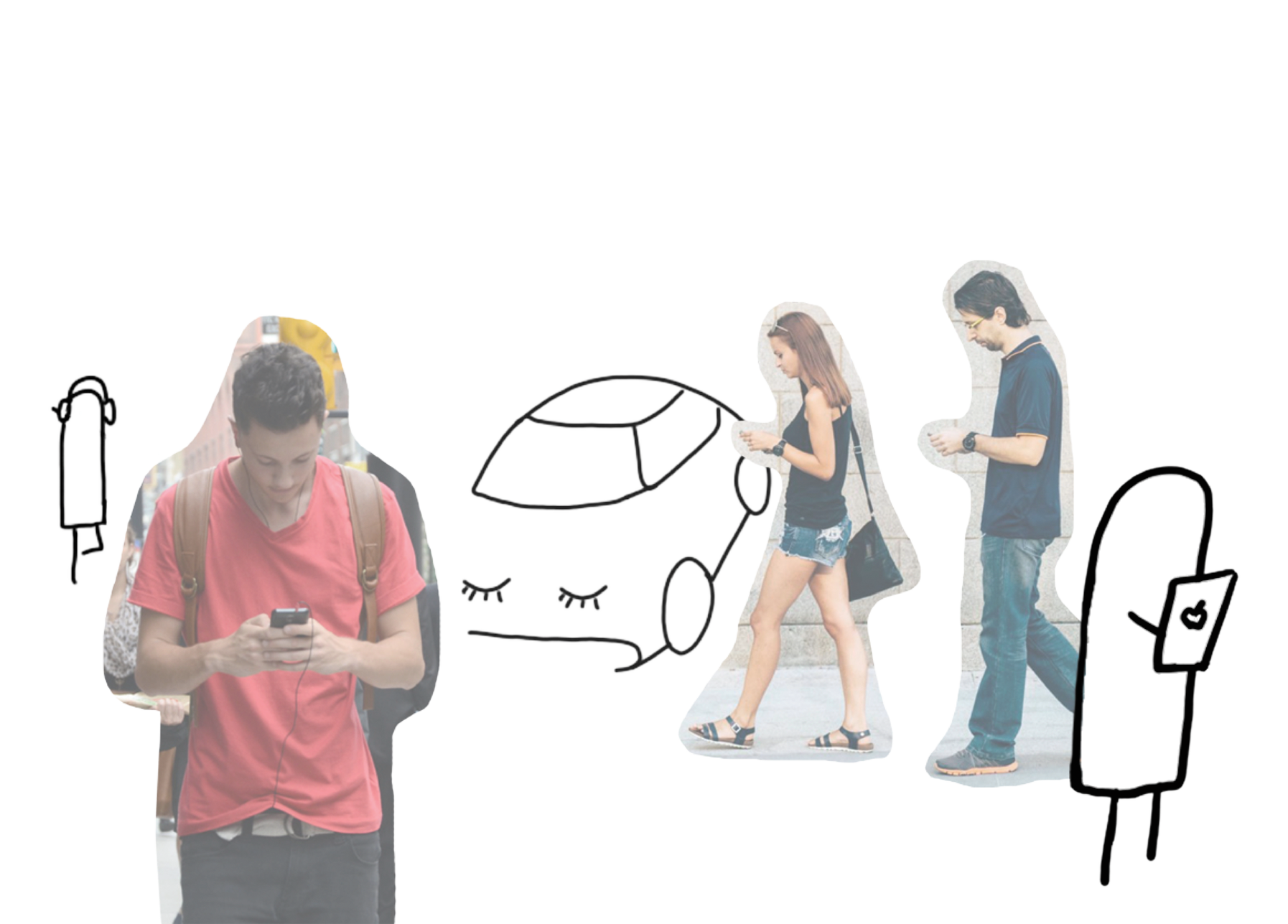
Most of those conditions are now suppressed — by screens, by headphones, by the quiet social agreement to treat other people in public as scenery.
Free Range Umbrellas is a participatory intervention that gently subverts that agreement.
It introduces a shared object into a space — something responsive, something belonging to no one in particular, something that makes your presence visible to others carrying the same thing.
It does not force encounter. It makes encounter slightly more possible.

This version of it keeps the gesture and adds a quiet network.
The design is simultaneously analog and digital. The gesture is physical. The intelligence is minimal and appropriate. The effect is not spectacle but atmosphere: the sense that something is awake on this block, and that you are part of it.
What would a city block feel like if it were designed to notice the people walking through it?