Surplus of social possibility
Every connected system is already inside a social situation. A vehicle on a city street. A health platform in the context of treatment. A device in the middle of a household's morning.
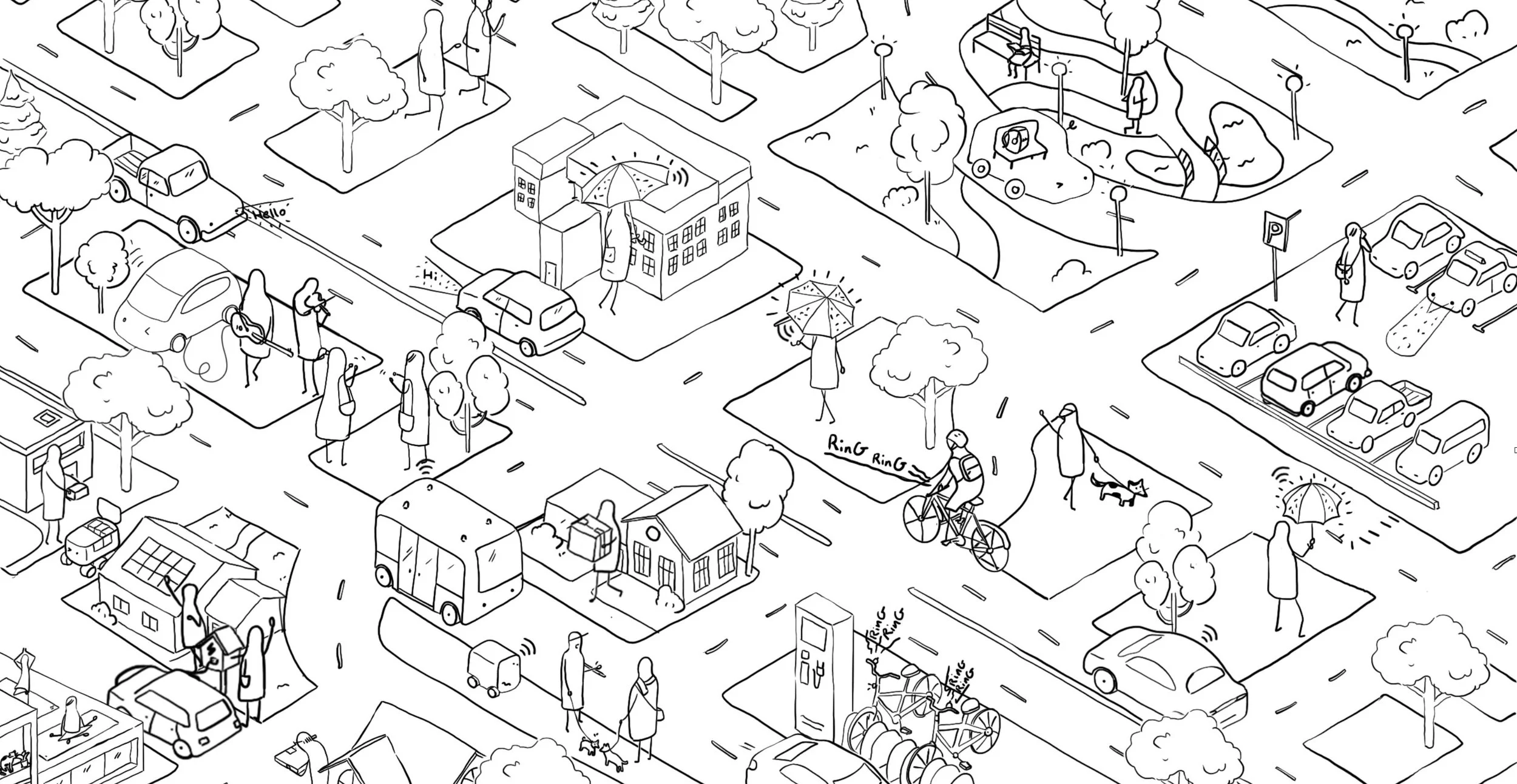
A vehicle is parked on a residential street where people are walking at night.
A healthcare platform is present during treatment. An AI assistant is in the room during a difficult conversation. A bus stop is surrounded by birds and strangers who have not looked at each other.
The situation is there. The technology is already in it. And current design uses almost none of what that situation contains.
This is what we call the surplus of social possibility: the gap between what a connected system currently does in a situation and what it could do — the relations it could acknowledge, the gestures it could make, the meaning it could participate in.
Every one of these situations contains more social potential than current design has accessed. The relations already present, the human goals operating beneath the surface task, the moments of possible acknowledgment or connection — all of this is there, unused, in every interaction pattern we have normalized.

Recognizing objects' utility in the network of these more universal human goals allows designer to make room for more possibilities of new relations, new behavioral scripts and new experiential narratives.
This potential for participation in new relations is an important characteristic of connected world and is rooted in openness of each moment of connected experience.
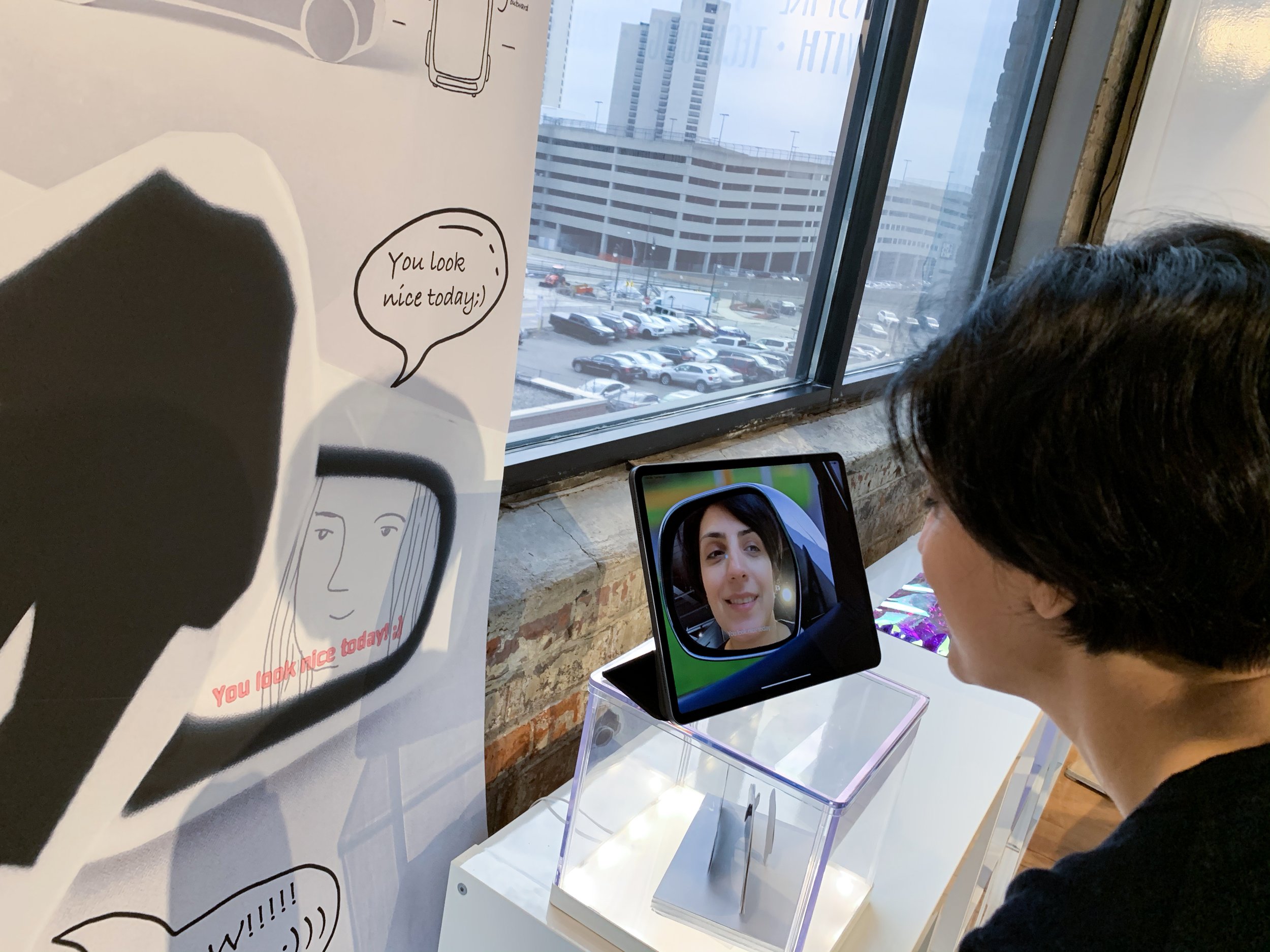
Surplus of social possibility is my name for that gap — between what the system currently does in a situation and what it could do. Finding and designing from that surplus is the beginning of our process.
The gap exists because most connected systems are designed for isolated tasks, not for the social life of the situations they inhabit. Their behavioral scripts were written with one question in mind: what does the user want to accomplish?
That question is necessary. It is not sufficient. It does not ask: who else is here? What relationships are already in this space? What would it mean for the system to take one step toward the world around it rather than waiting for a command?
When you ask those questions, the surplus becomes visible.
A parked fleet that lights paths for pedestrians who do not own those cars. A car that rings a bell instead of honking at a cyclist. A bus stop that translates birdsong into something a waiting person can respond to. A side mirror that turns outward to face the street.
None of these required new technology. They required a different question about what the technology is for.
Surplus of social possibility is not found by asking: what feature should we add?
It is found by asking: what is already happening in this situation, and what would it mean for the system to notice it?
That is the question that begins our design process — in every domain, at every scale.
→ See in the work:
Walk With Me ·
Curious Mirror ·
Small Talk Bus Stop ·
It's Going to Rain ·
Ring My Bell ·