Software Defined Vehicle
The service-centric, modular architecture of SDV designates vehicles as adaptive assets, always on and open for external collaborations.
A conventional vehicle is a centralized systems of mechanical components.
Its capabilities are fixed at manufacture. It does what its hardware allows, and no more.

Parked cars that hear from other cars rain coming and tell the people walking past.
The software-defined vehicle is different. Its architecture is modular and updatable.
Its systems are networked.
It receives signals from the world around it — from infrastructure, from other vehicles, from the people inside it and near it. It is, in the most precise sense, always on.
That creates a design questions that did not previously exist: how does an always-on vehicle interact with the outside environment, what does it do when it is not being driven?
Ninety-five percent of a vehicle's life is spent parked. Its sensors are active. Its computing is available.
Its presence in a community — on a residential street, in a parking structure, at a destination — is real and continuous.
The question is whether that presence is intentionally designed, or simply left as a default.
What is the interface of this new connected vehicles architecture?
At its essence it is a shared context for action.


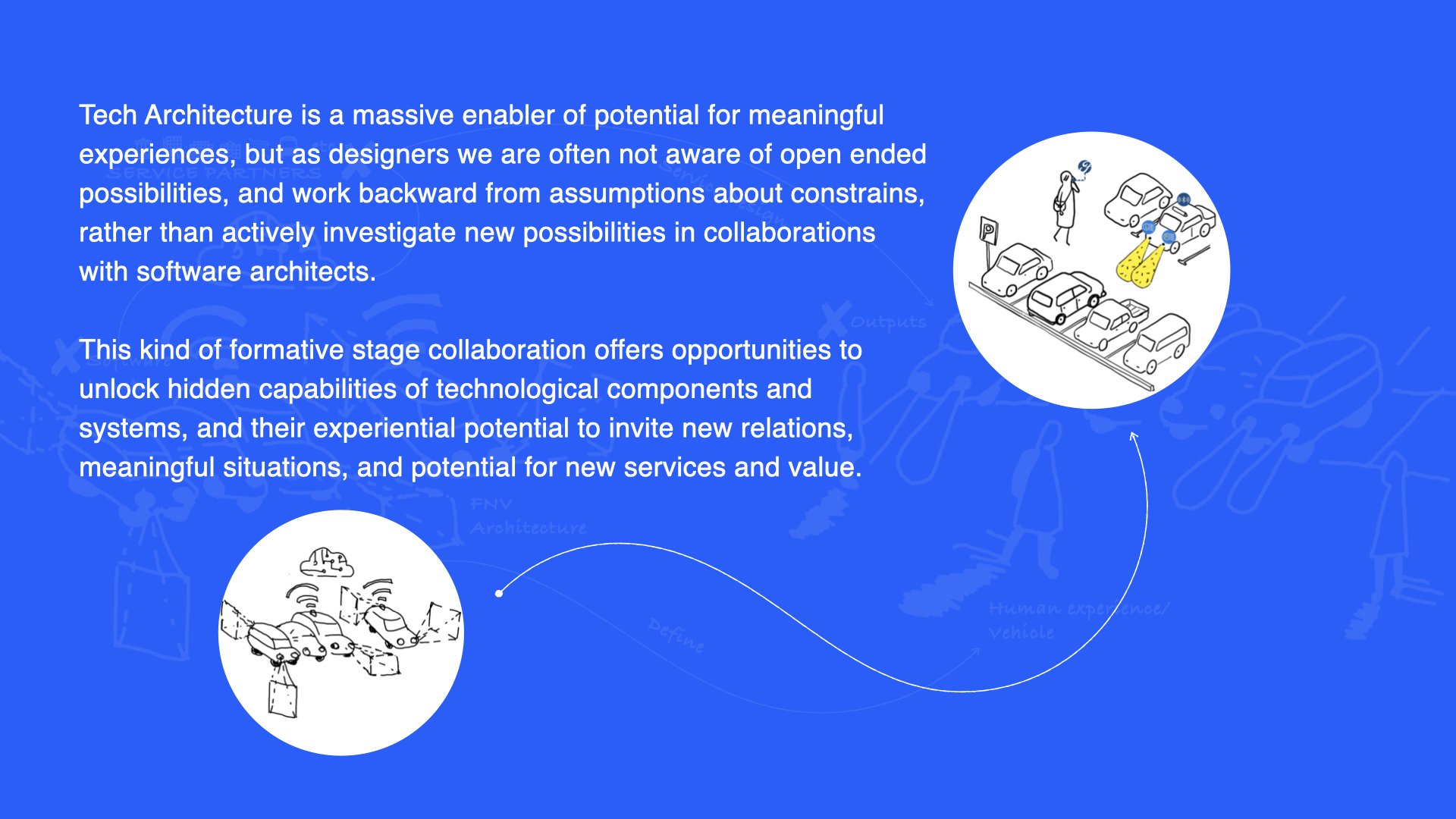
Our relationship with always-on, adaptive technology like Software Defined Vehicle no longer can be fully understood through one-to-one instrumental task loops.
The software-defined vehicle is not a new kind of car.
It is a new kind of participant.
k_o has partnered with Ford Product Development since 2018 to explore that question. The work spans the full range of the software-defined vehicle's experiential potential:
how the vehicle participates in the social life of the city around it when parked (Walk With Me, Curious Mirror);
how it communicates with other road users with a new civic vocabulary (Ring My Bell);
how a fleet of connected vehicles can act as a distributed sensing and service platform for the communities they are embedded in (It’s going to rain).
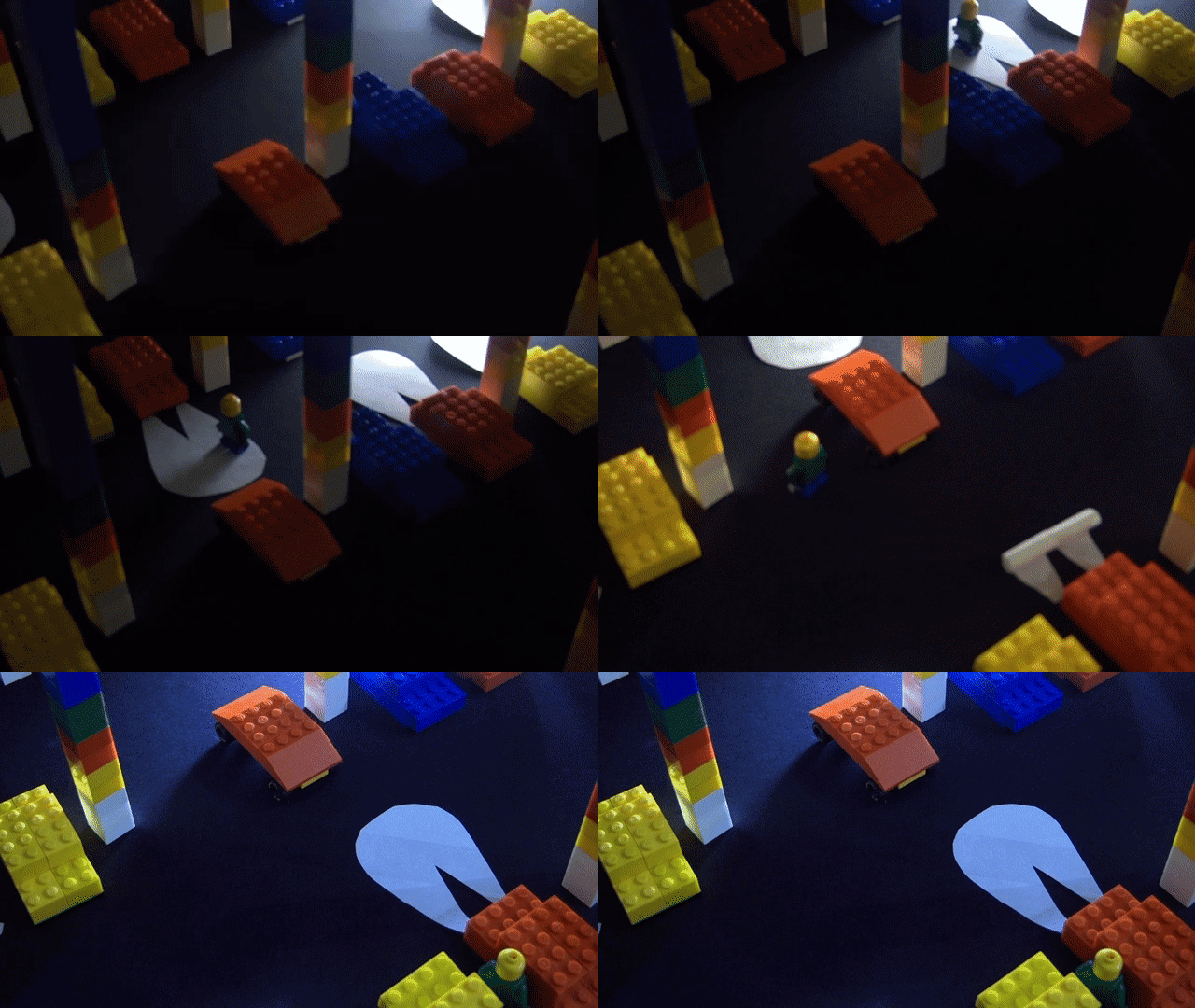
“Walk with me” as experiential manifestation of FNV4 architecture, invites experience of connected world as open, imaginative and distributed - responsive interface without an interface.
This kind of experience Interface is no longer solely means to control and command technology. It’s a shared context for participation, collaboration, new relations, and services.
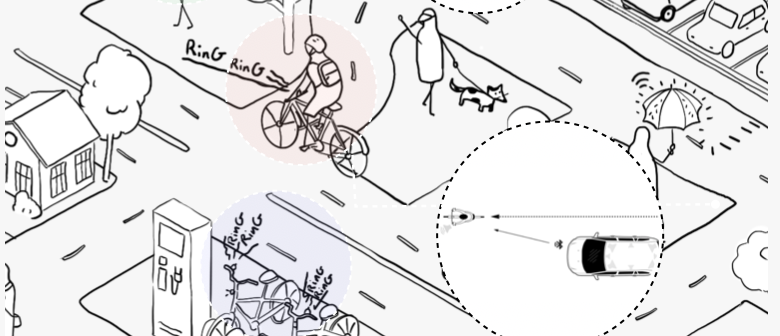
FNV4 is defined by how it unlocks potential of V2X.
FNV4 further decouples functionality from physical hardware.
Everything is software.
Our experience design proposals articulate Software Defined Vehicle architecting principles organized around human participation rather than individual task completion.
The work has produced a US patent, multiple patent disclosures, and a set of experience principles that contributed to Ford's FNV4 platform architecture.
Connected vehicle architecture represents a new model of collaboration between people and technology that unlocks the potential of technology to participate in human relations beyond automating isolated tasks.
Designing experiences for adaptive technology of Software Defined Vehicle is about investigating how architecture makes room for new, compelling human experiences and new services that can meaningfully differentiate what otherwise would be a conventional function.
We envision always-on technology, like Software Defined Vehicle, as adaptive asset that engage with external ecosystems. This platform is capable to resonate, being present and making connections, composing relations, and inviting new services.

Through emotionally resonant experiences, it not only offers value, but also reveals meaning, purpose and the "why" behind our actions. By inviting moments of awareness of our emotions and relations in techno-social situation, we can create unexpected harmonies making everyday experience vibrant and meaningful.
FNV4 is defined by how it unlocks potential of V2X - where X supposed stand for everything, but industry narrow conventions trapped X as a technical infrastructure.
Our experiences allow to imagine how software architecture FNV4 takes a leap forward.