Mobility is a social practice. When we move through a city — in cars, on foot, on bikes, waiting at stops — we are not only traveling. We are participating in the social life of a place.
Design question: What would connected mobility look like if it were organized around social participation rather than individual utility?
Mobility Commons is an experience framework built on one observation: every connected system in the mobility ecosystem has unrealized social potential.
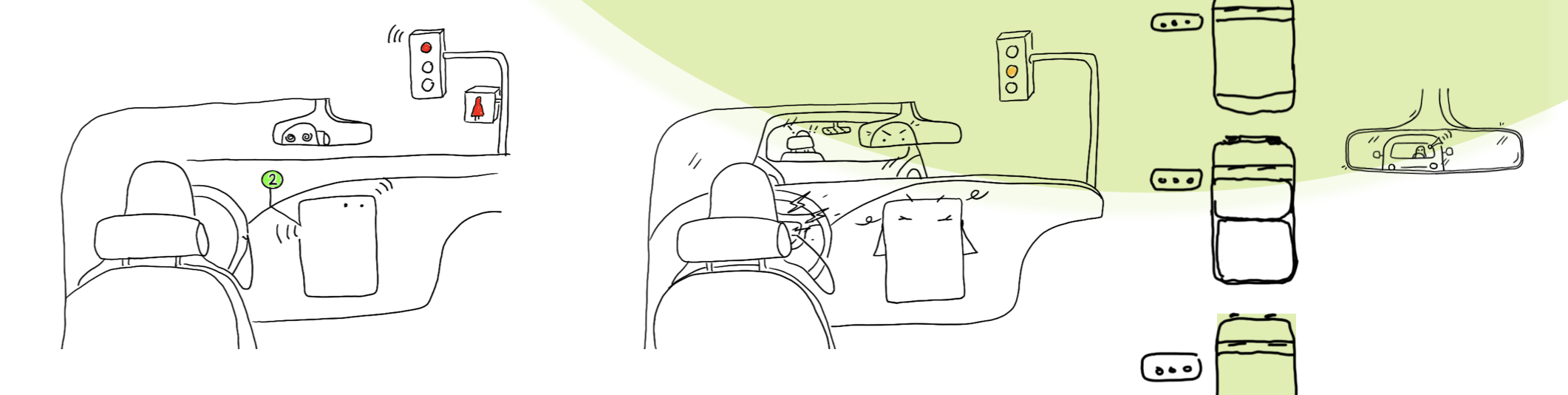




Vehicles, infrastructure, and platforms are capable of more than their current interaction patterns reveal.
They can notice a situation. They can make a small gesture. They can act as participants in the community around them rather than as private utilities serving isolated users.

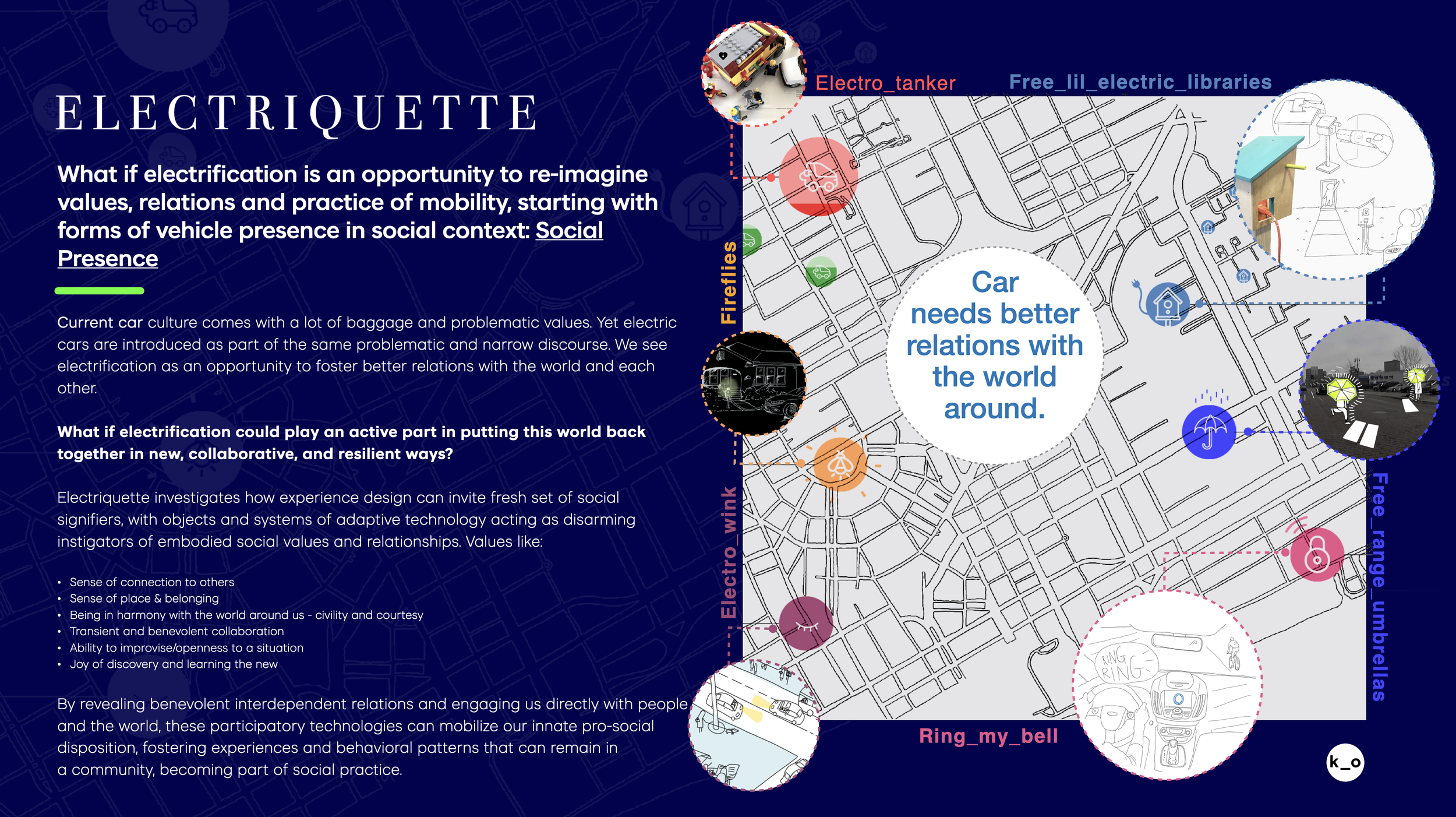
Designing the social “components” together with the technical components as a strategically choreographed system
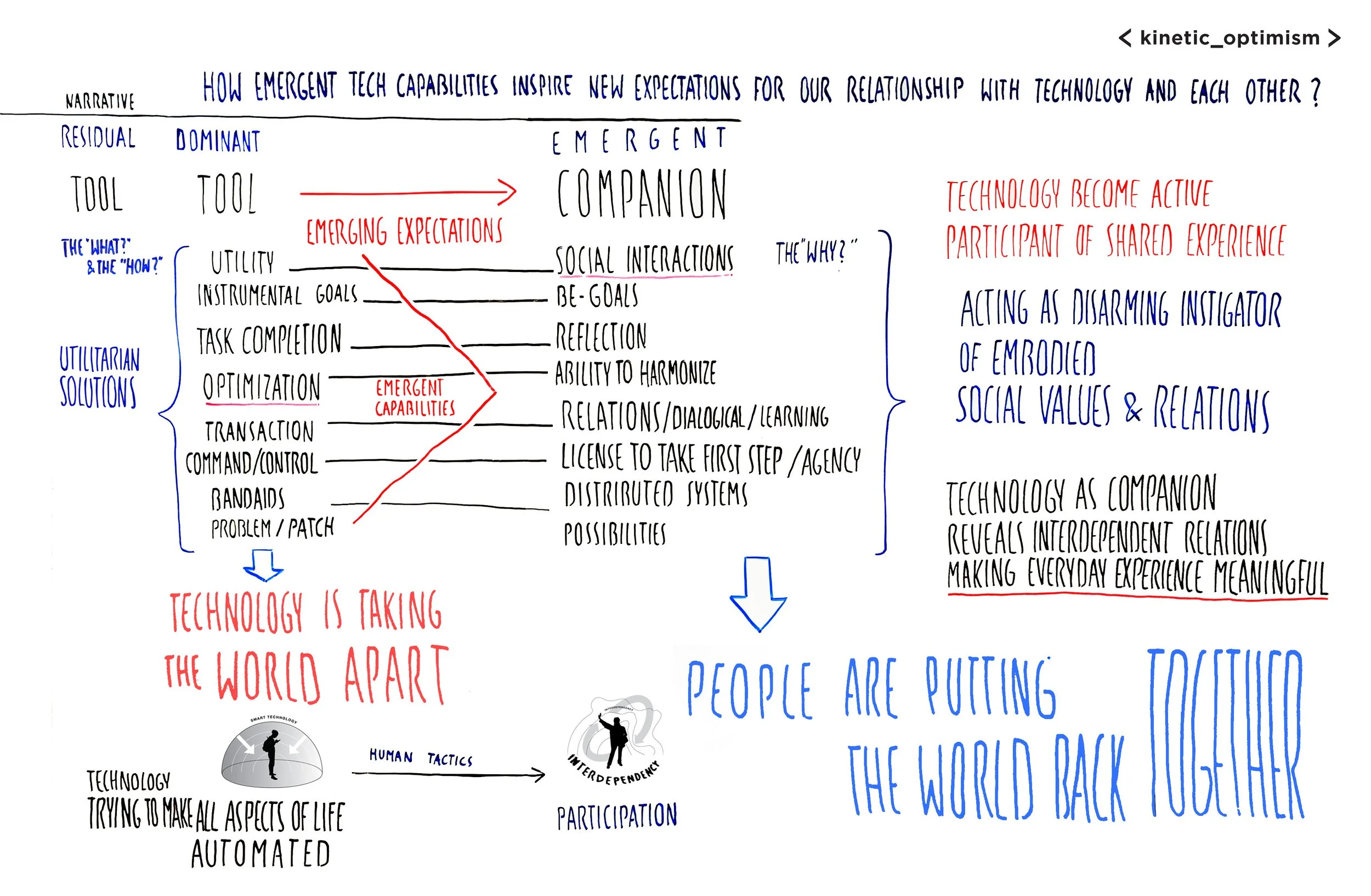
New capabilities and emergent expectations allow technology to participate in social encounters not just tasks. These encounters can create shared understanding, recognizable participatory patterns, behavioral scripts, and provide new energies and ways of interacting with one another. Connected vehicles become a dynamic, collaborative, community asset, actively participating in mobility as everyday social practice.
There is always a surplus of social possibility to any situation that is not revealed by current interaction patterns, which we are calling the Social Reality Surplus.
By taking the first step, always-on, adaptive technology may produce meaningful unexpectedness beyond it’s expected instrumental role. By doing so, it can suspend daily automatism, revealing interdependencies and instigating participatory actions from other members of the community.
Relational value emerging from collaborative encounters tend to remain in the community where they were produced, becoming social practice, and they form behavioral scripts and energies of the “social infrastructure” available to a community to participate in.
These new notions (such as meaningful unexpectedness, social reality surplus, collaborative encounters) can help us design meaningful experiences in the new techno-social situations and reimagine the role that vehicles and other forms of technology can play in the broader community and in people’s lives.
People and technology can be engaged in social potential of each moment and each other.
Technology is part of social practice — it is informed by shared values and intentionally facilitates transient collaborations through behavioral scripts embedded in objects and systems.
Connected, always-on technology is already embedded in that practice.
The question is whether it participates consciously.
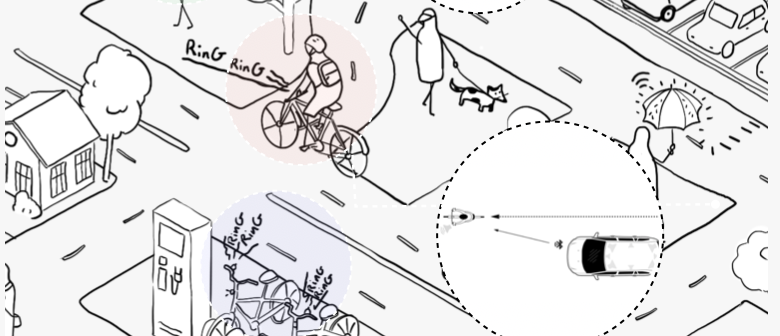
Mobility Commons as design framework identifies three capabilities that emerge when connected mobility is designed this way:
Meaningful unexpectedness. When technology takes the first step — lights a path, announces rain, acknowledges a fellow traveler — it creates a moment that exceeds expectation without demanding attention. These moments are brief. They linger.
Social reality surplus. Every situation contains more social possibility than current design captures. A parked fleet is also a lighting system. A network of moving vehicles is also a weather-sensing community asset. Recognizing this surplus is a design decision.
Collaborative encounters. Technology does not replace human interaction. It creates the conditions for it. When a vehicle's gesture invites reciprocity — between people, between modes of transport, between drivers and pedestrians — it becomes part of the social infrastructure of a place.
The dominant design model treats mobility as a sequence of tasks to be optimized. Mobility Commons proposes something different: mobility as a shared environment to be inhabited. The technology is already there. The question is what role it plays.
Background Investigation:
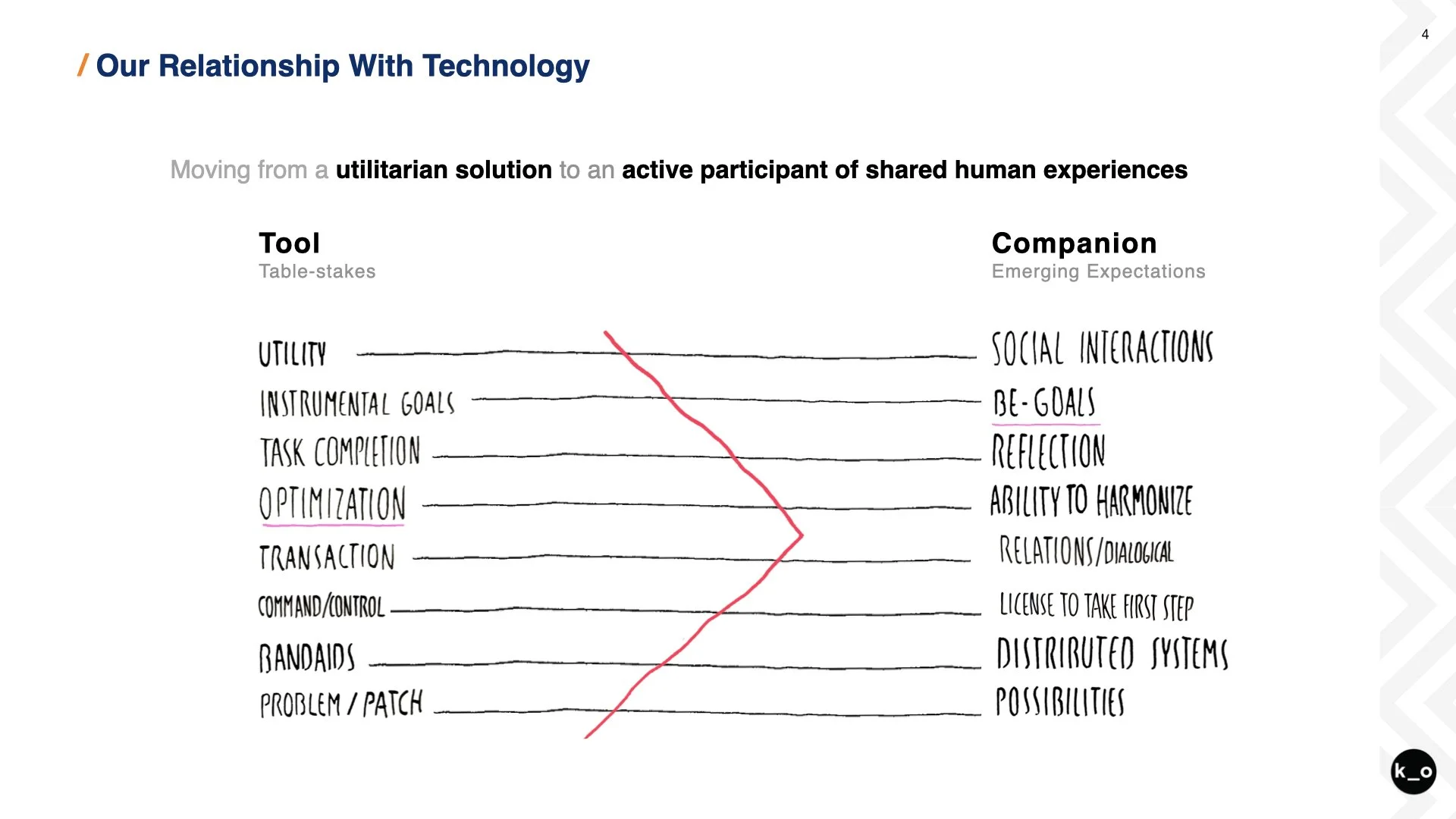
Our relationship with technology expands, moving closer to involvement in human relations, intentions and emotions.
Technology as companion of shared experience:
New set of emergent tech capabilities give objects ways to get more involved in our lives and world around. This involvement goes beyond the familiar role of technology as tool and utilitarian solution -technology becoming active participant in our lives, and of our shared experience.
As a result, these emergent tech capabilities together with the emerging participatory disposition can invite new expectations.
As active participant of shared experiences, technology’s role won’t be to replace human interaction, rather to help foster interactions and social conditions for meaningful everyday experiences. Technology may gain the license to act as disarming instigator of social values and relations.
Technology become more than a tool to efficiently automate every aspect of our lives. Building on this it may become something akin a companion, revealing interdependent relations and making everyday experience meaningful. The notion of companionship is about participation and involvement in relationship with the world around us, not just about a relationship with a single user.
In dominant narrative of today, technology takes the world apart (fragmenting, to make every aspect of life optimized and automated); The emergent narrative is about People and Technology Putting the World Back Together, finding and creating connections between us.
Emergent techno-social space will have capacity to inspire and intentionally support benevolent forms of social collaboration.
We’ll start by imagining human experience in smart world with smart vehicles, this raises several questions that we must consider as we design new vehicles, services, and experiences;
How might technology participate in mobility as social practice?
How might technology become part of social infrastructure, offering a means to produce relational settings, and to help us find meaning in everyday experience?
———
This perspective moves experience design beyond the narrow focus on isolated tasks, into richer relation with intentions, emotions and context into sites and situations of everyday life and raises questions about what it means to design for social practice rather than engineer for optimizing instrumental utility alone.