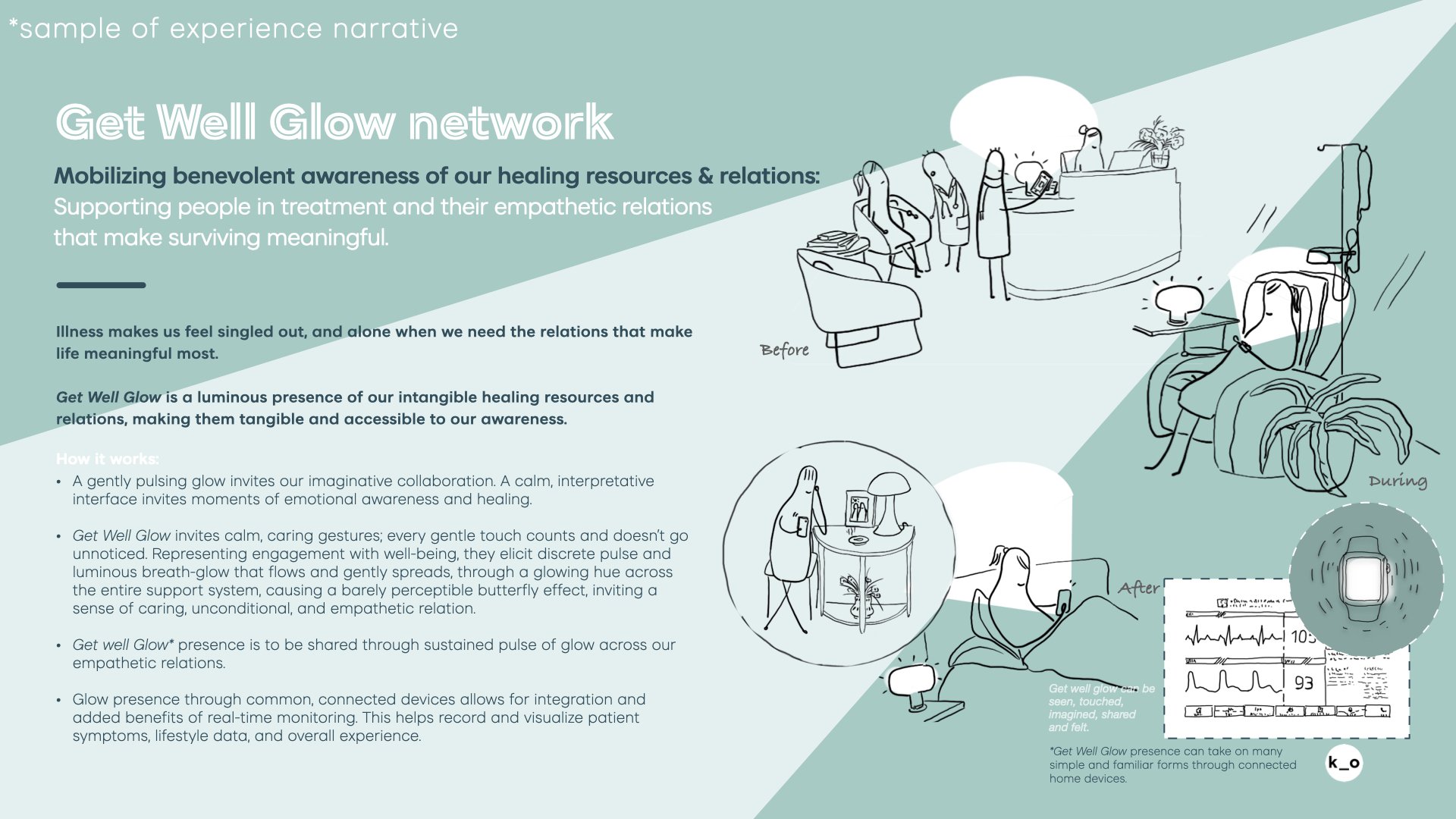
Get well glow
On what adaptive technology could do in the most significant human experiences.
A diagnosis of cancer, or any serious illness, confronts people with existential questions — about what their life means, who they are, what they are living for. The way people cope with these questions is consistent and largely invisible to the medical system: they reaffirm what makes life worth living. They identify their reasons to stay alive. They reorganize meaning.
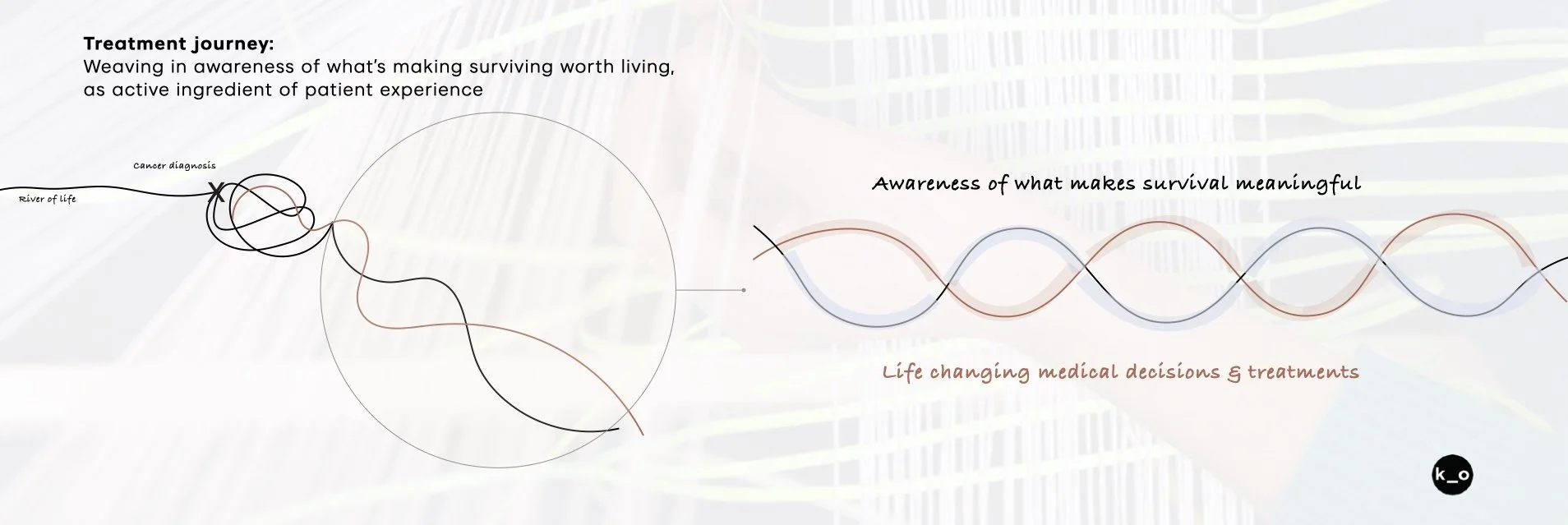
Connected, adaptive technology is already present in that experience — in the hospital room, in the home, in the devices patients carry. It tracks clinical data. It manages appointments. It sends reminders.
It does not, currently, attend to any of this.
The design claim:
Adaptive technology could support the emotional and relational dimensions of serious illness — not by automating empathy, but by creating conditions for it. By making the care network visible. By keeping the patient's own sources of meaning present and accessible. By acknowledging, in small ways, the weight of what is happening.
This is what we call the techno-existential situation: the moment when connected technology is present during one of life's most significant experiences, and either participates in it meaningfully or remains indifferent. Illness is one such situation. So is grief, recovery, the anticipation of something irreversible.
In each case, the technology's indifference is not neutral. It is felt. And it need not be the default.
The proposition — Get well glow:
A person is in treatment. The people who care about them are often far away.
Get well glow is a connected ambient presence — a gentle, luminous signal that links a person in treatment to their network of care without requiring words or screens. A friend opens a simple interface and sends a pulse of warmth. In the patient's space — a bedside lamp, a small device, a piece of wearable material — a soft, breathing glow appears.
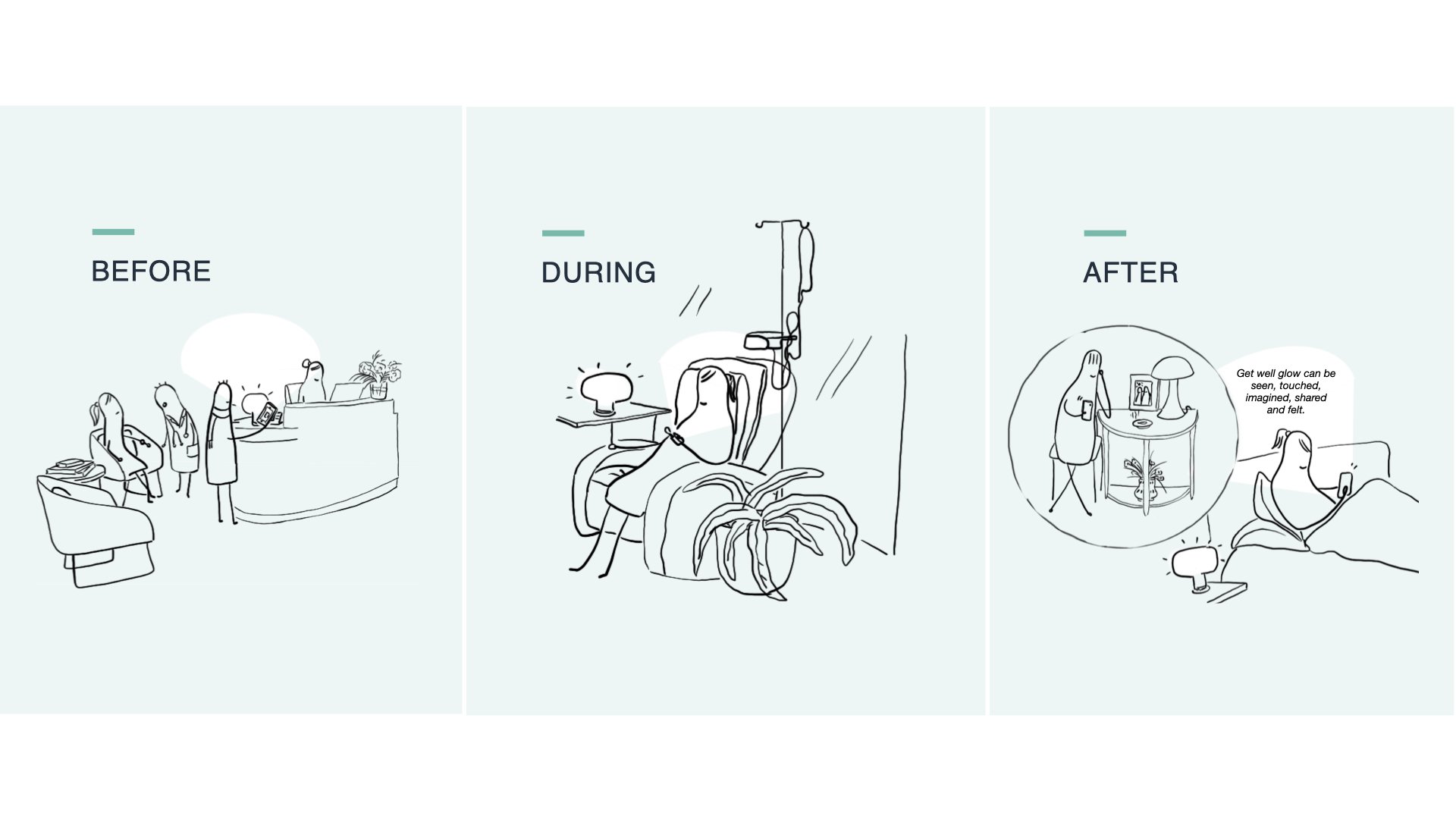
People cope with cancer by reaffirming what makes survival meaningful.
This is not supplementary to treatment. It is how people survive, psychologically, through treatment.
This project asked: what would it mean to treat that capacity as a design resource?
Not as sentiment. As an active ingredient in the experience of care.
The framework reorients the experience of illness around the patient's own sources of meaning — relationships, values, purposes — and asks how adaptive technology could support those dimensions in real time.
Not by automating empathy. By creating conditions for it.
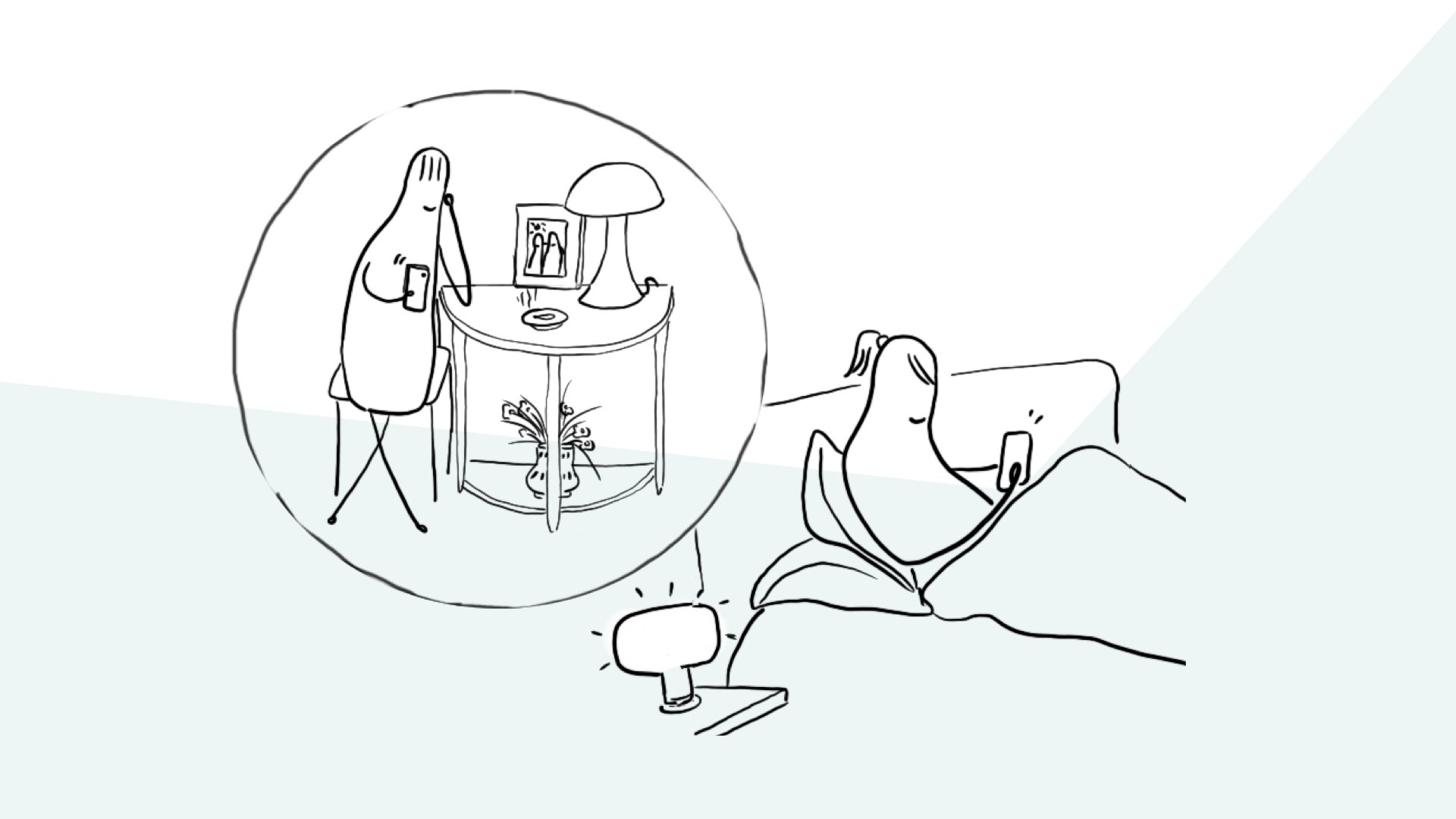
Not a notification. Not a message. A presence.
The pulse says: I am thinking of you right now. I am holding you in my attention.
This is not a feature. It is a design claim made tangible: that awareness itself is a resource in healing. That when a person in treatment feels connected to the people who care about them, that connection supports recovery in ways that are real even if they are hard to measure. And that technology, which is already in the room, could hold that connection — quietly, continuously, without burdening it with language.
Design question: In the most significant human experiences, what does it mean for technology to be present rather than merely available?