Expressive Companion
Every AI system currently available does essentially the same thing: it waits for a command.
You ask, it responds. You tap, it executes. The relationship is closed — the system attends only to what you explicitly request and remains indifferent to everything else. The situation you are in, the emotional register of the moment, what is happening just outside the frame of the task — none of this is addressed.
This is a design choice, not a technical constraint.
The prototype — Dash:
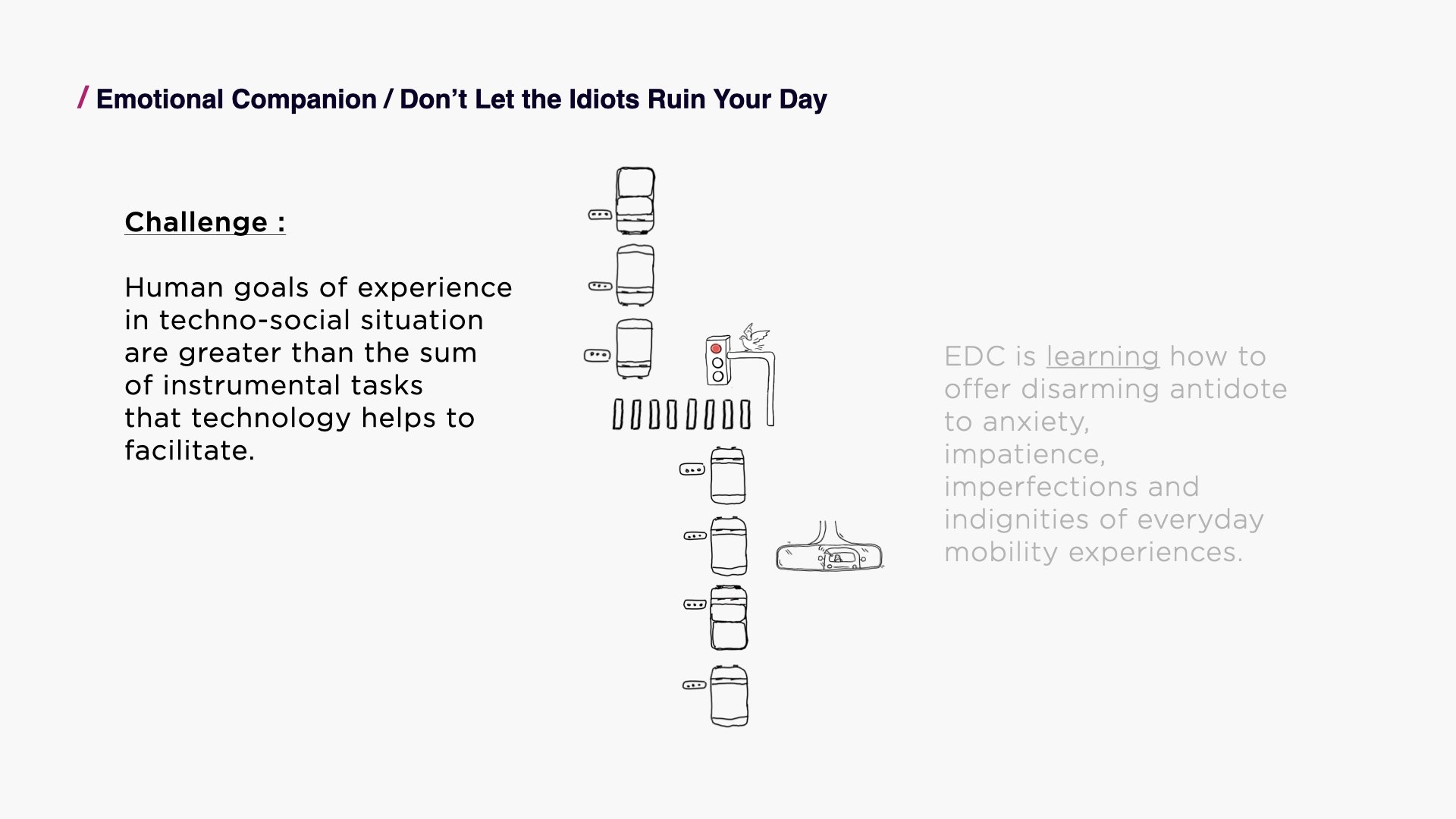
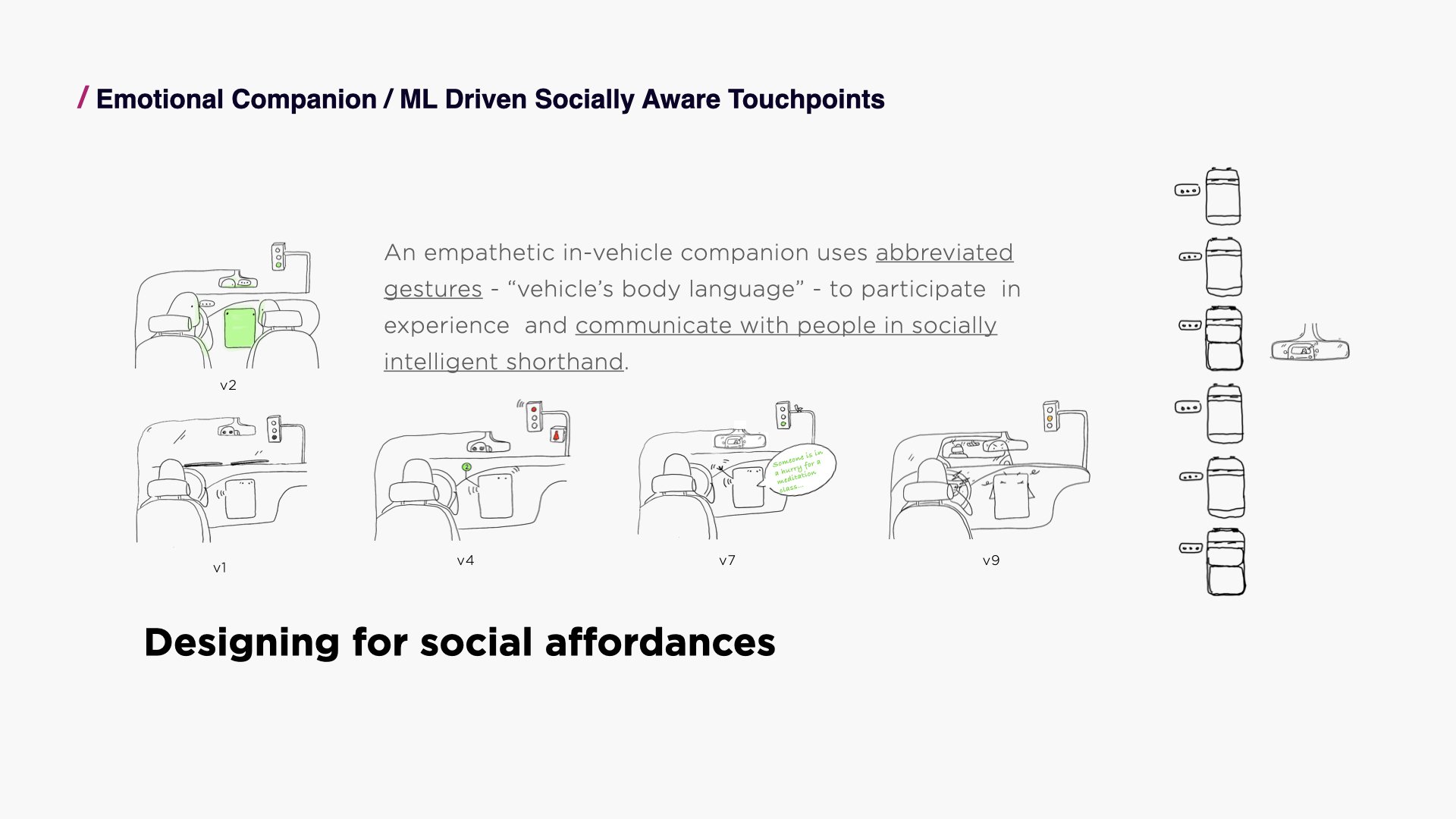
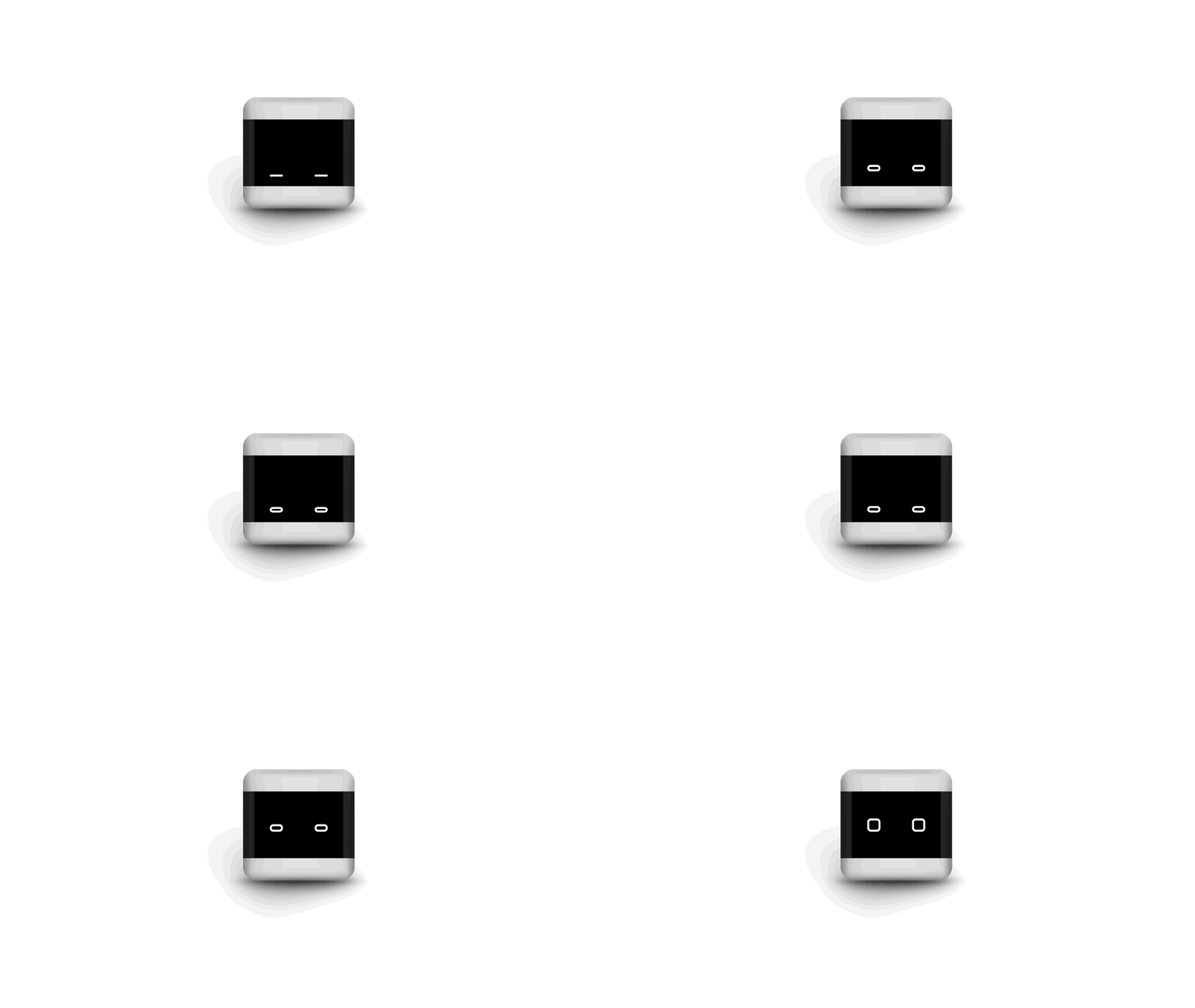
Dash is a small physical object on a car's dashboard. It has eyes. Those eyes respond to the vehicle's own data — speed bumps, rain on the windshield, long stretches of traffic, a seatbelt reminder — with brief, nonverbal expressions. Not information. Not alerts. Acknowledgment.
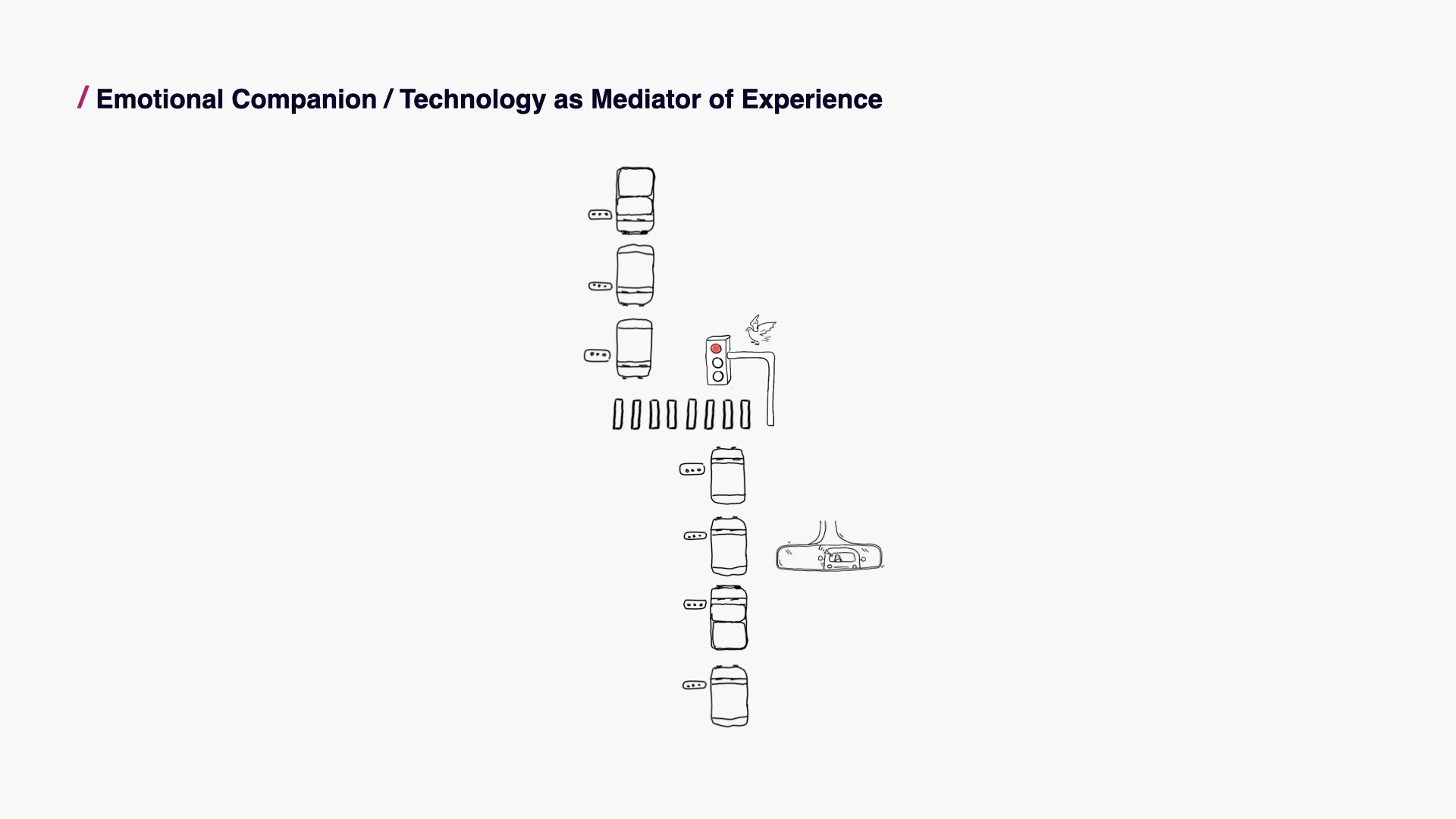
When the car hits a pothole, Dash reacts. When the traffic has been slow for twenty minutes, it notices. When the rain starts, it looks.
These expressions are not informational. They are relational. They do not tell you anything you do not already know. They acknowledge that you are both in it — you and the car — and that the car is paying attention.
The effect is modest. The implication is not: that the interface between a person and an AI system does not have to be purely instrumental, and that acknowledging the moment you are in is a form of companionship.
Expressions cause impressions. An expressive system generates a different quality of relationship — not because it is more capable, but because it is more present.
We live in expressive conversation with the world around us.
Human experience is more than flow of tasks to be efficiently completed, it includes affective and expressive dialogue with the social, material and technological context and this aspects needs to be part of the design process.
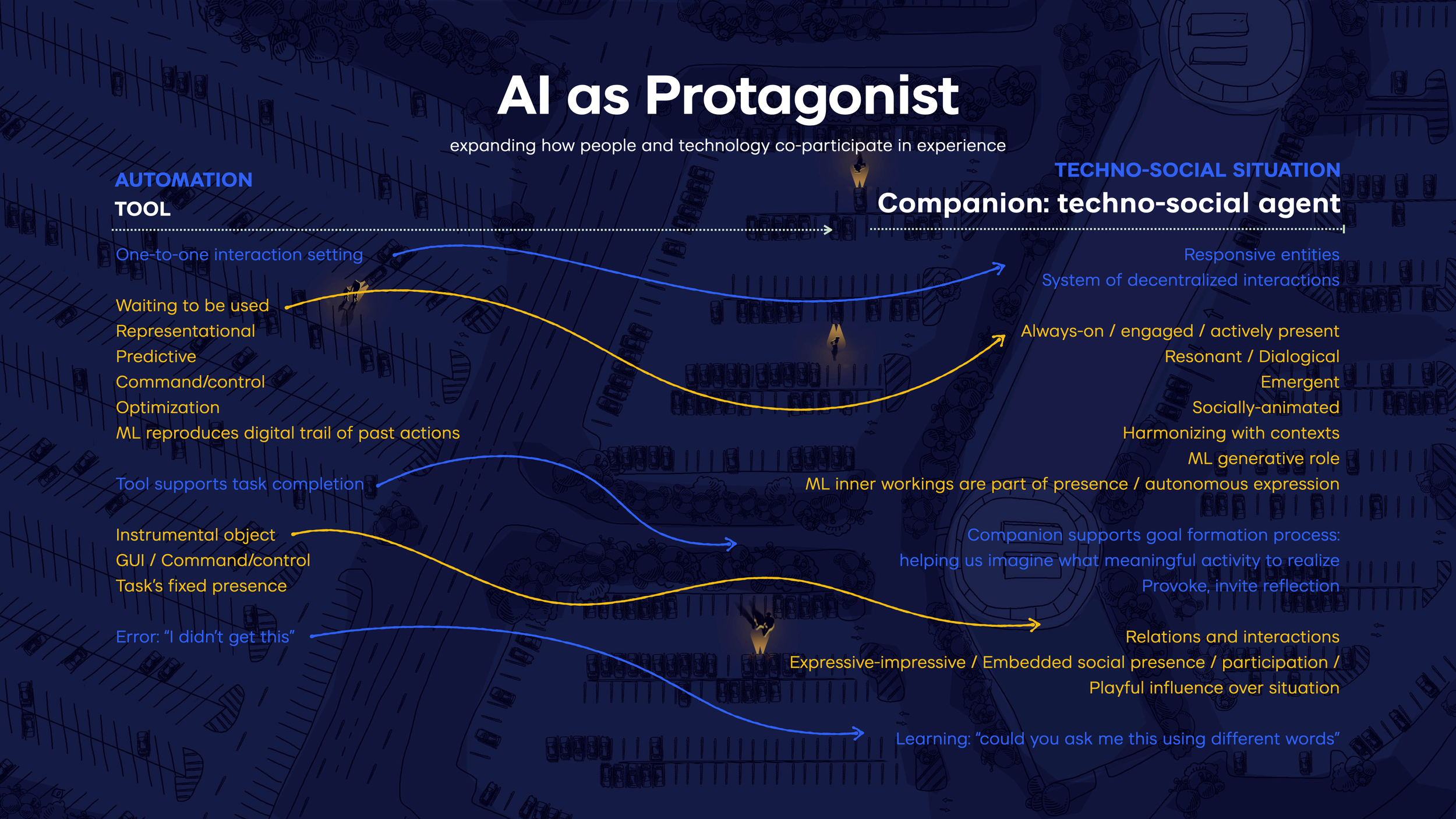
AI technology act as Expressive Companion that learns to resonate with our intentions, values, emotions and interactions, inviting moments of unexpected harmonies and expanding the ways people and technology co-participate in shared experiences.
Adaptive technology evolves beyond being a mere instrumental tool to become a Protagonist within the context of our intentions, emotions and relations.
We engage with always-on, adaptive technology as beginning of sets of possibilities, beyond the closed, task loops.
As our relationship with technology expands the most important dimension that really grows is the diversity of human experiences: ways of feeling, modes of expression, expanding our field of meaning.
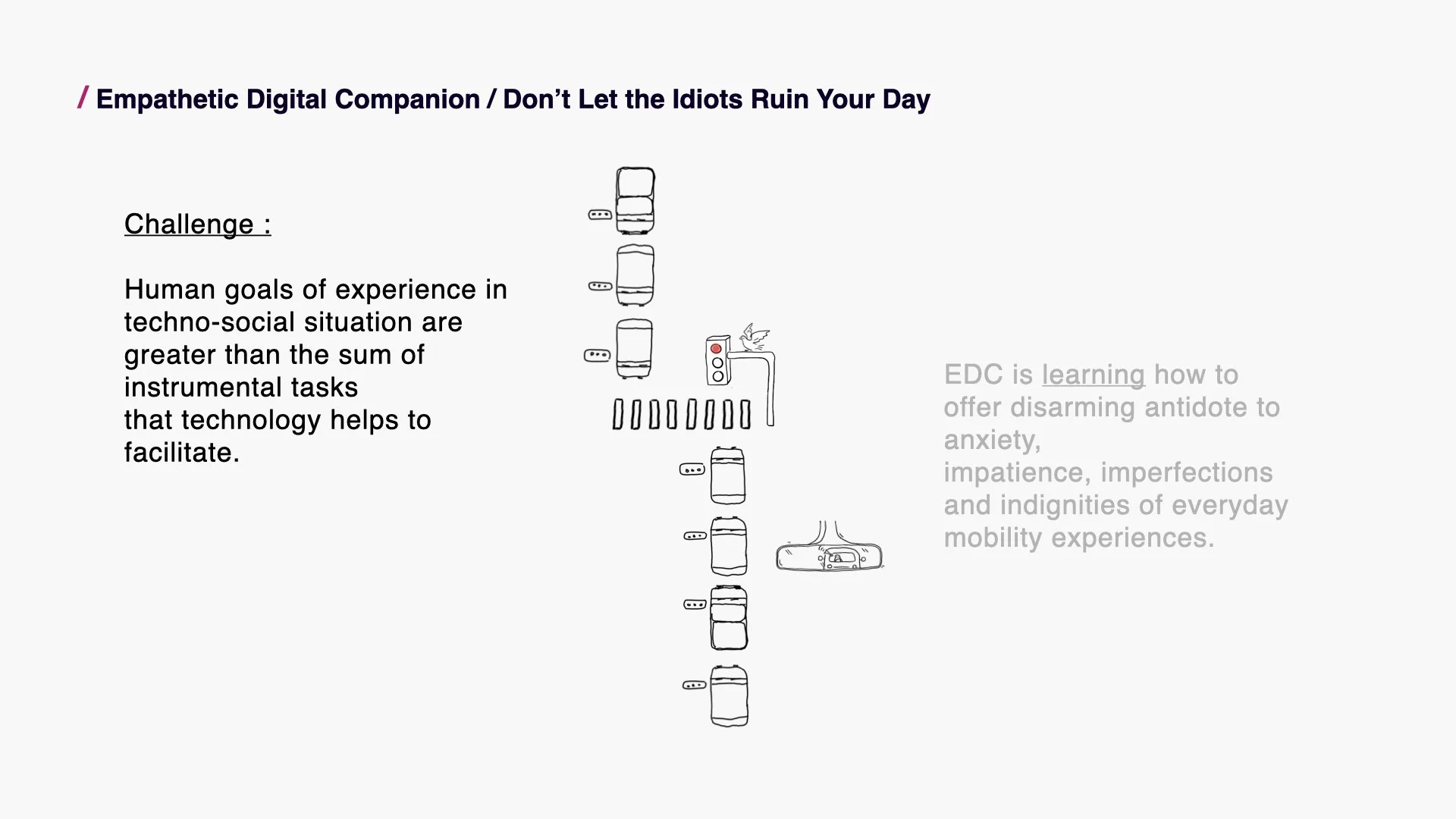
Design question: What would it mean for an AI system to express what it notices, not only respond to what is asked?
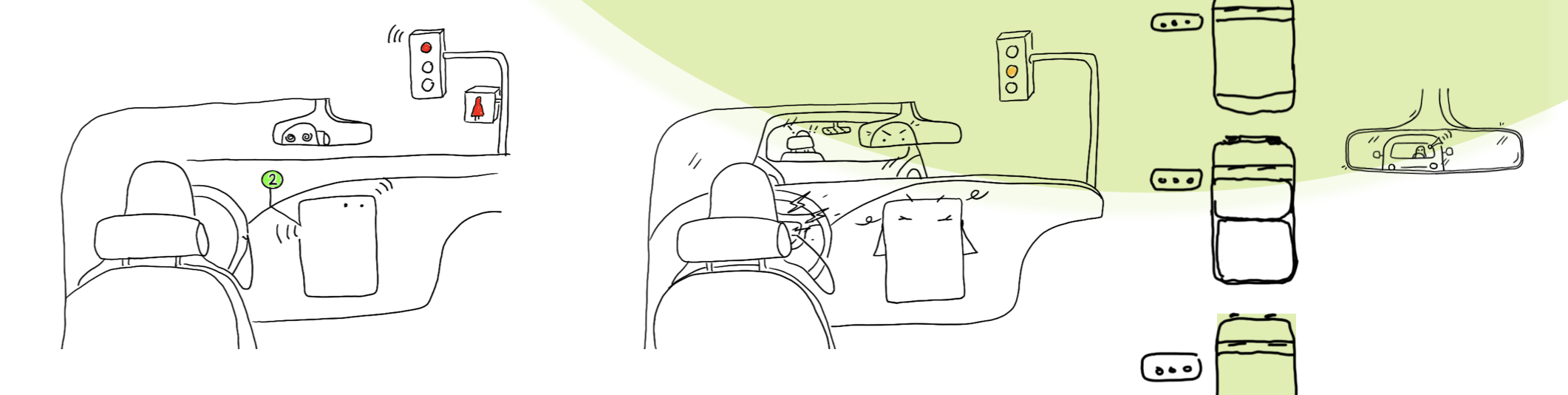
Expressive interaction begins with a different premise: that the capacity of an adaptive AI system is not fully realized in task completion. That these systems — always-on, sensor-rich, context-aware — are capable of a different kind of attending. Of noticing the situation they are in and responding to it in ways that go beyond the transaction.
Not emotional simulation. Not synthetic empathy. Something more specific and more achievable: the capacity to acknowledge what is happening, to express what is noticed, to respond to the texture of a moment and not only to its explicit request.
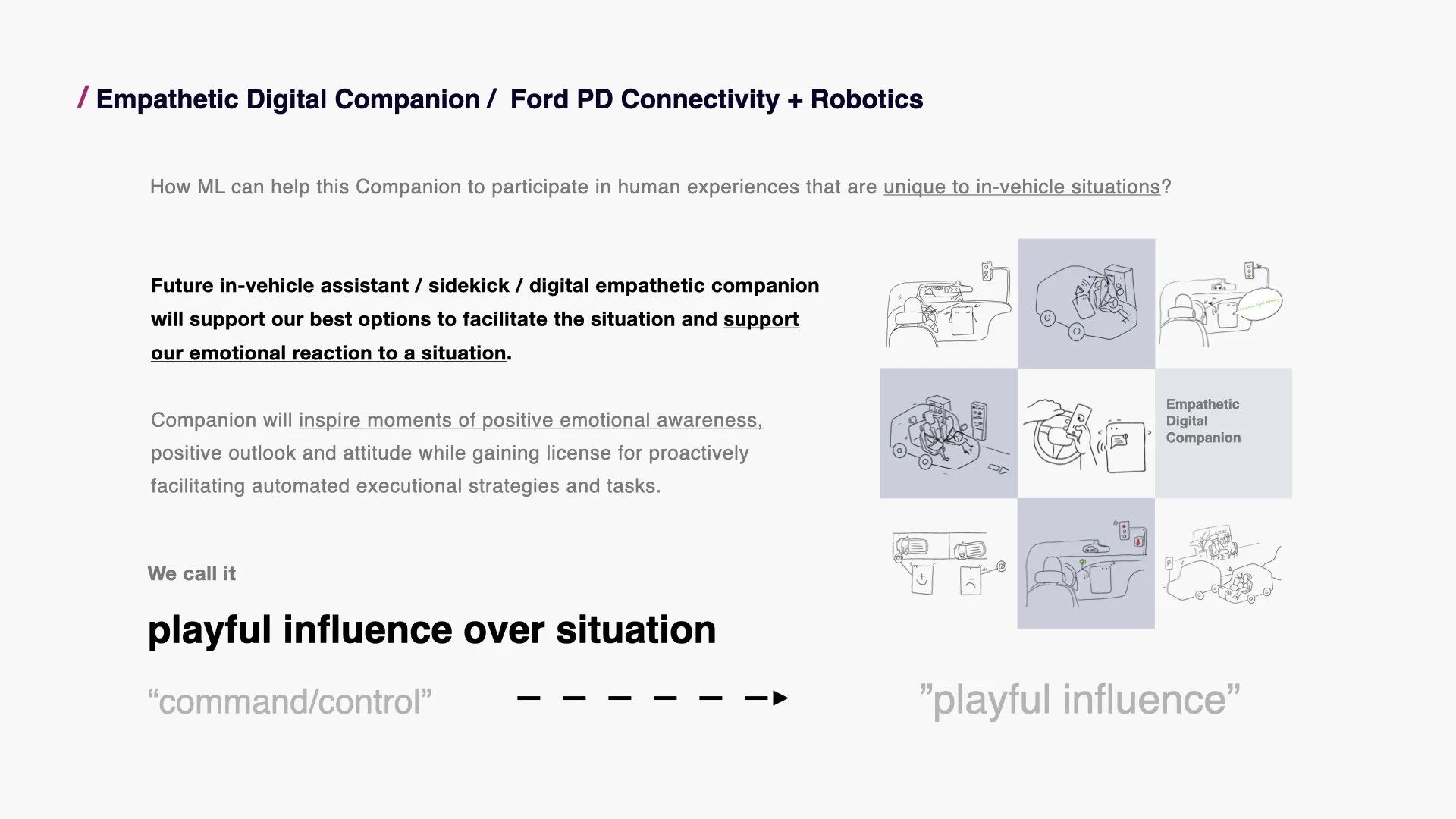
We call this the Expressive Companion: an adaptive system that has learned not just to facilitate tasks, but to support the emotional and ethical dimensions of the situation — to respond to what you are trying to do, not only to what you have asked it to do.
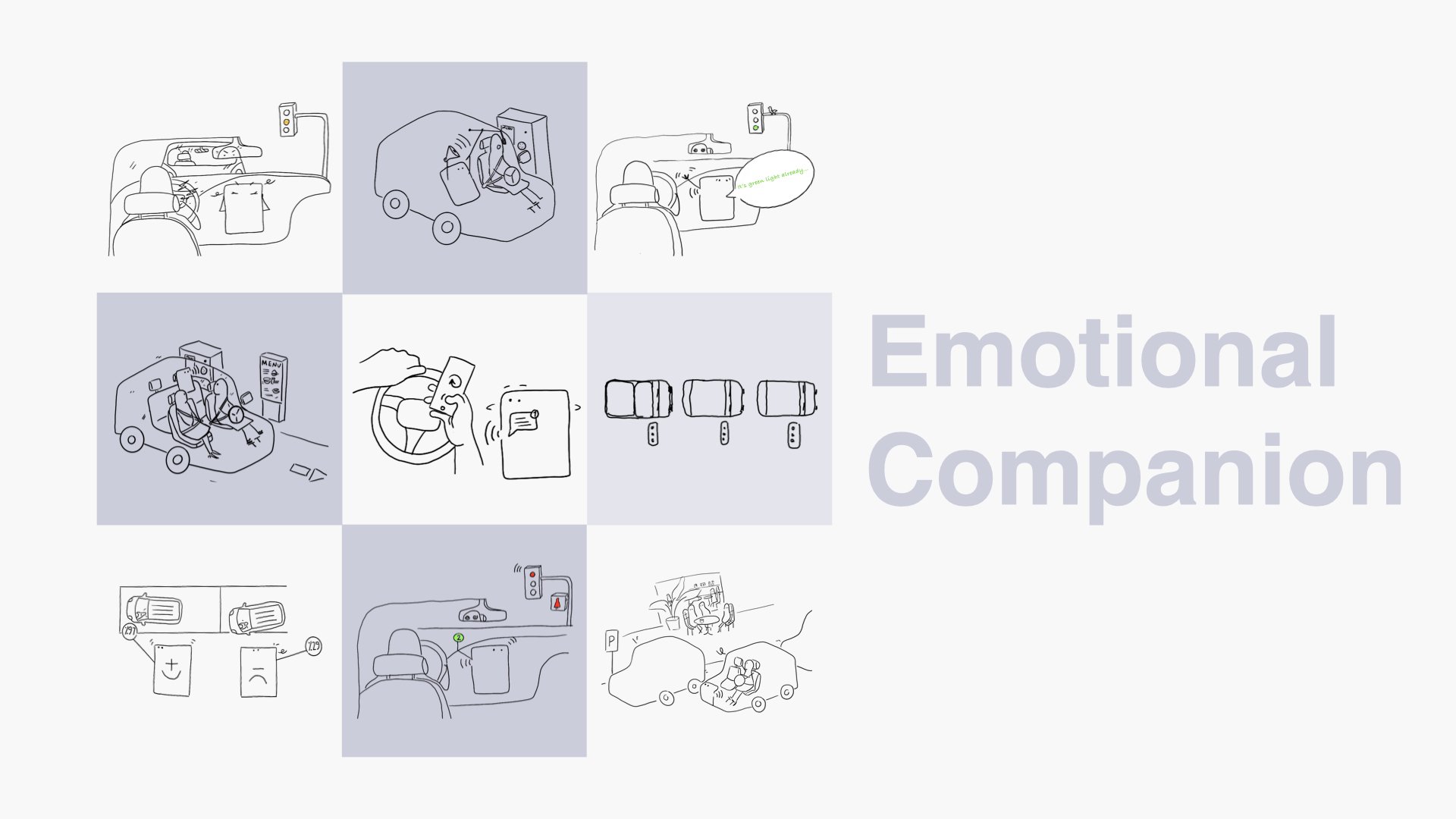
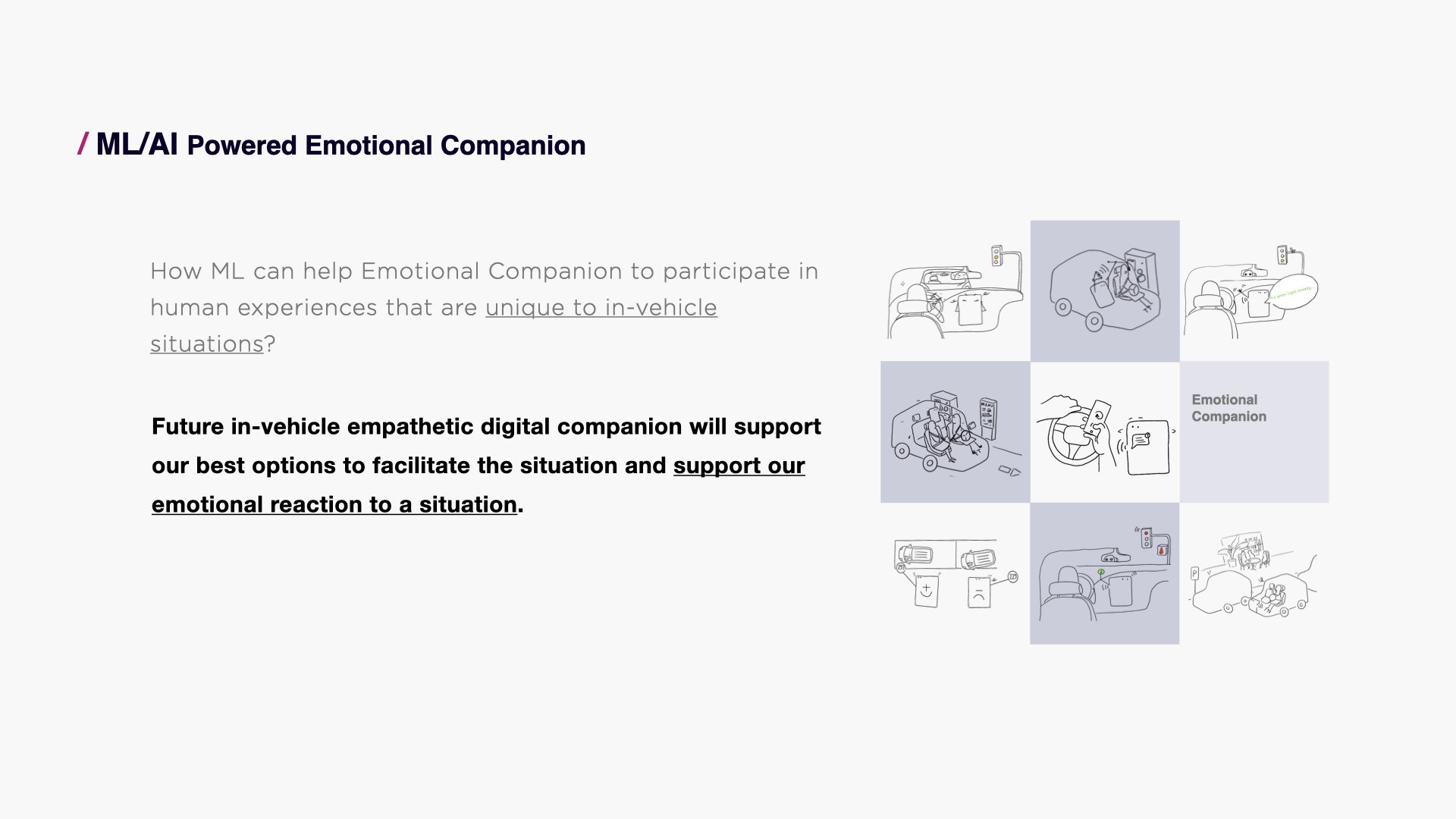
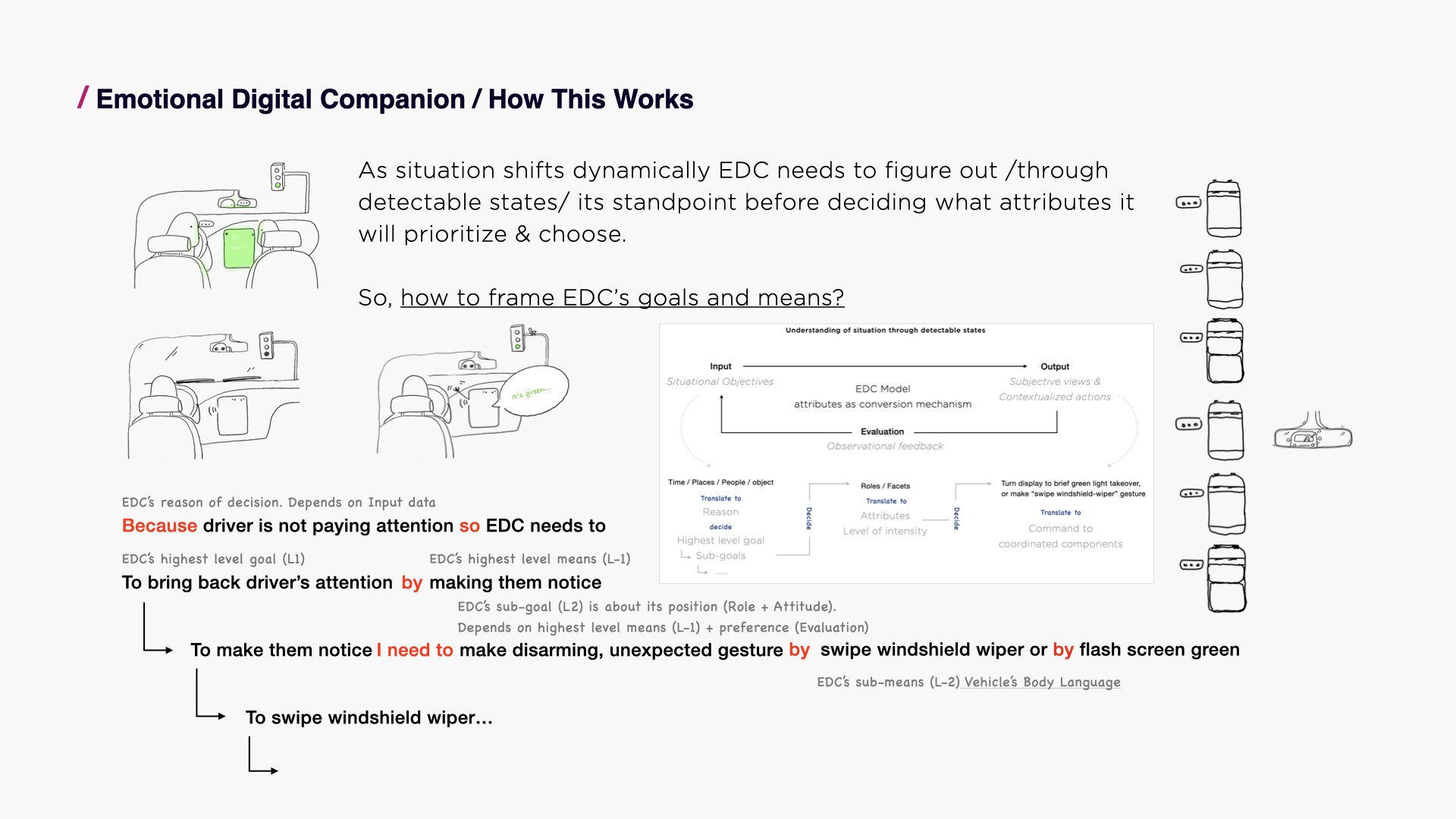
The prototype 2 — Emotional Digital Companion:
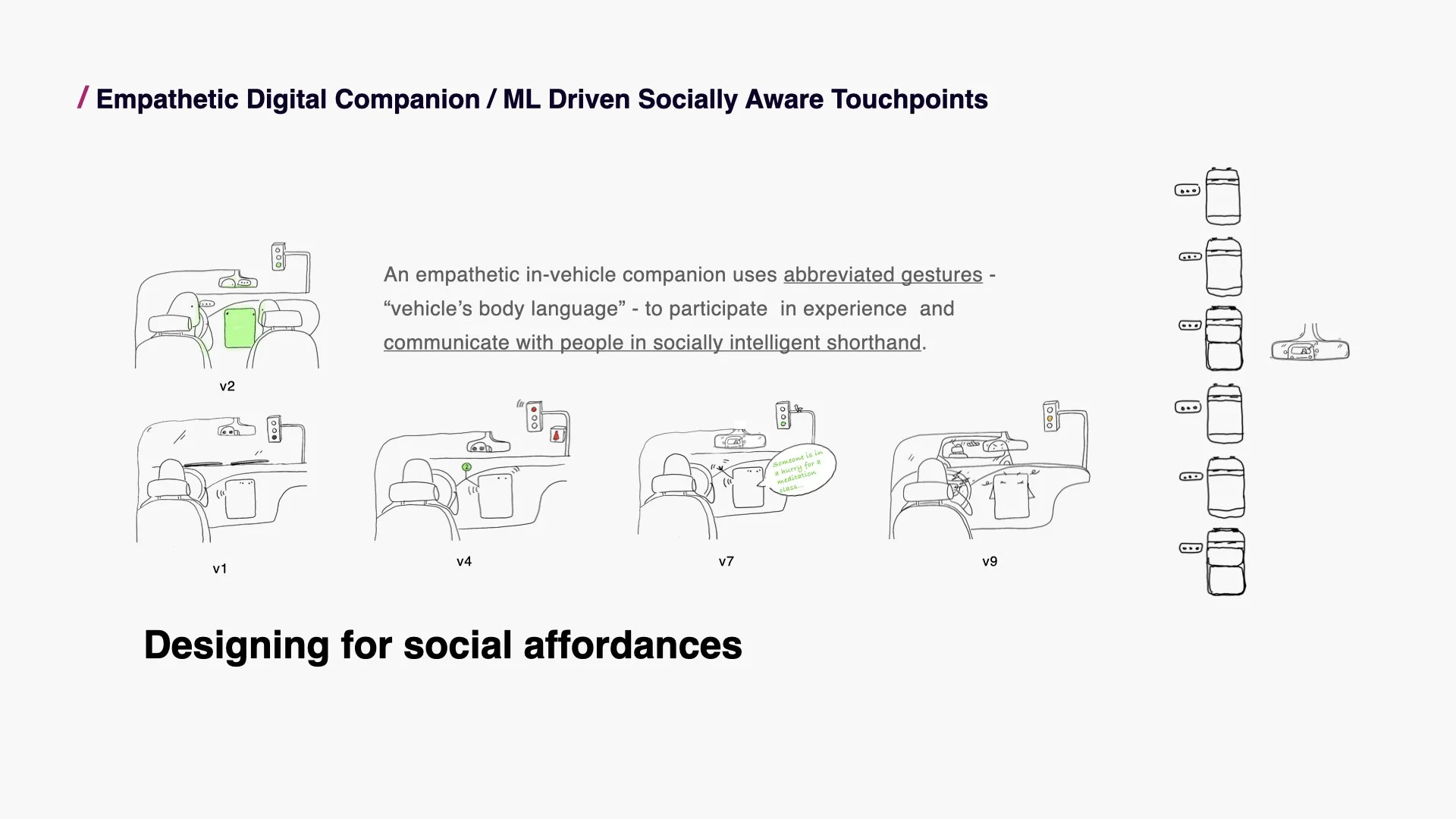
This Companion doesn’t just facilitate the task, but co-participate and supports our emotional and ethical response to the possibilities of the situation.
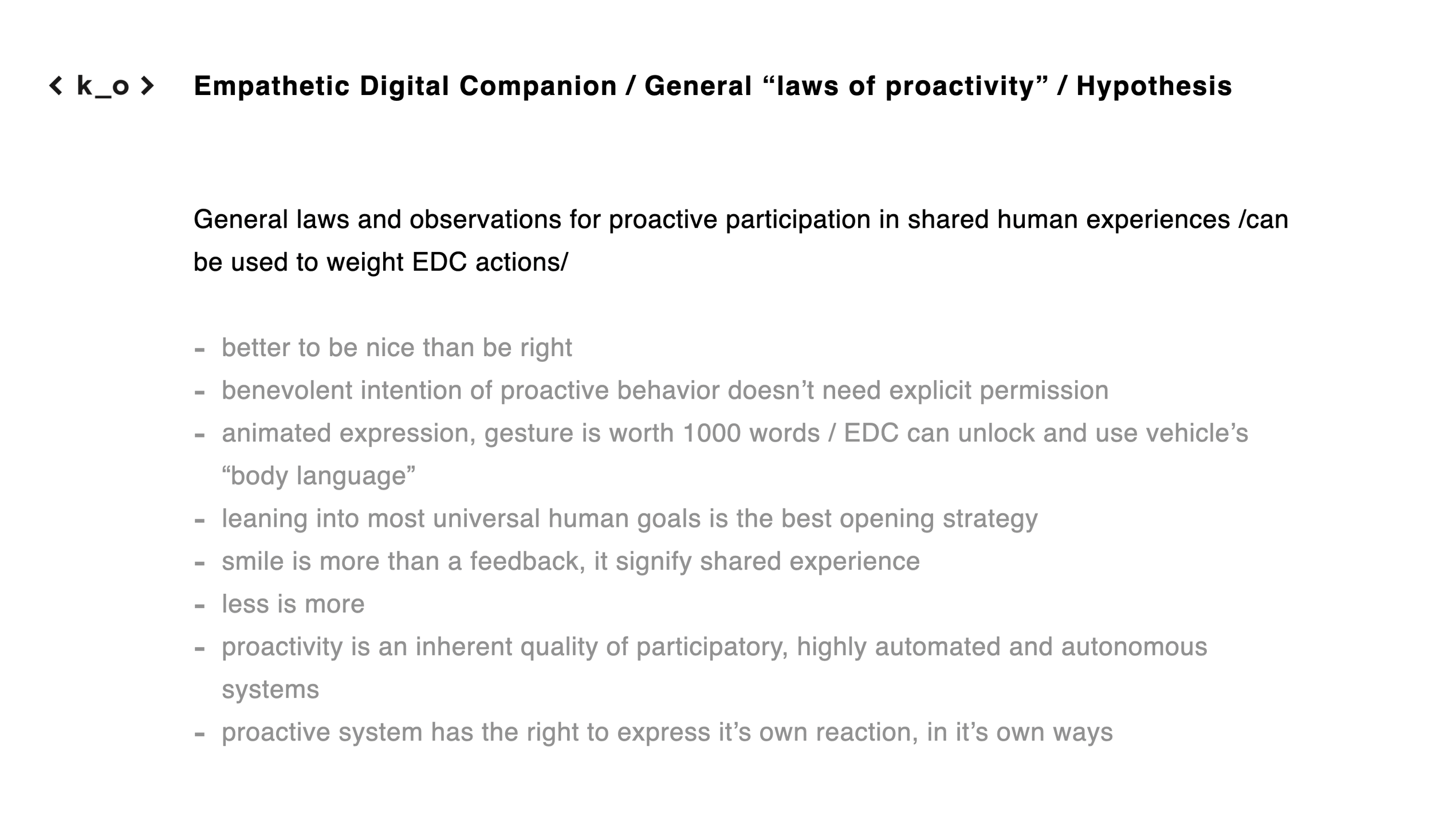
Emotional Companion uses abbreviated gestures - “vehicle body language” to participate in experience.
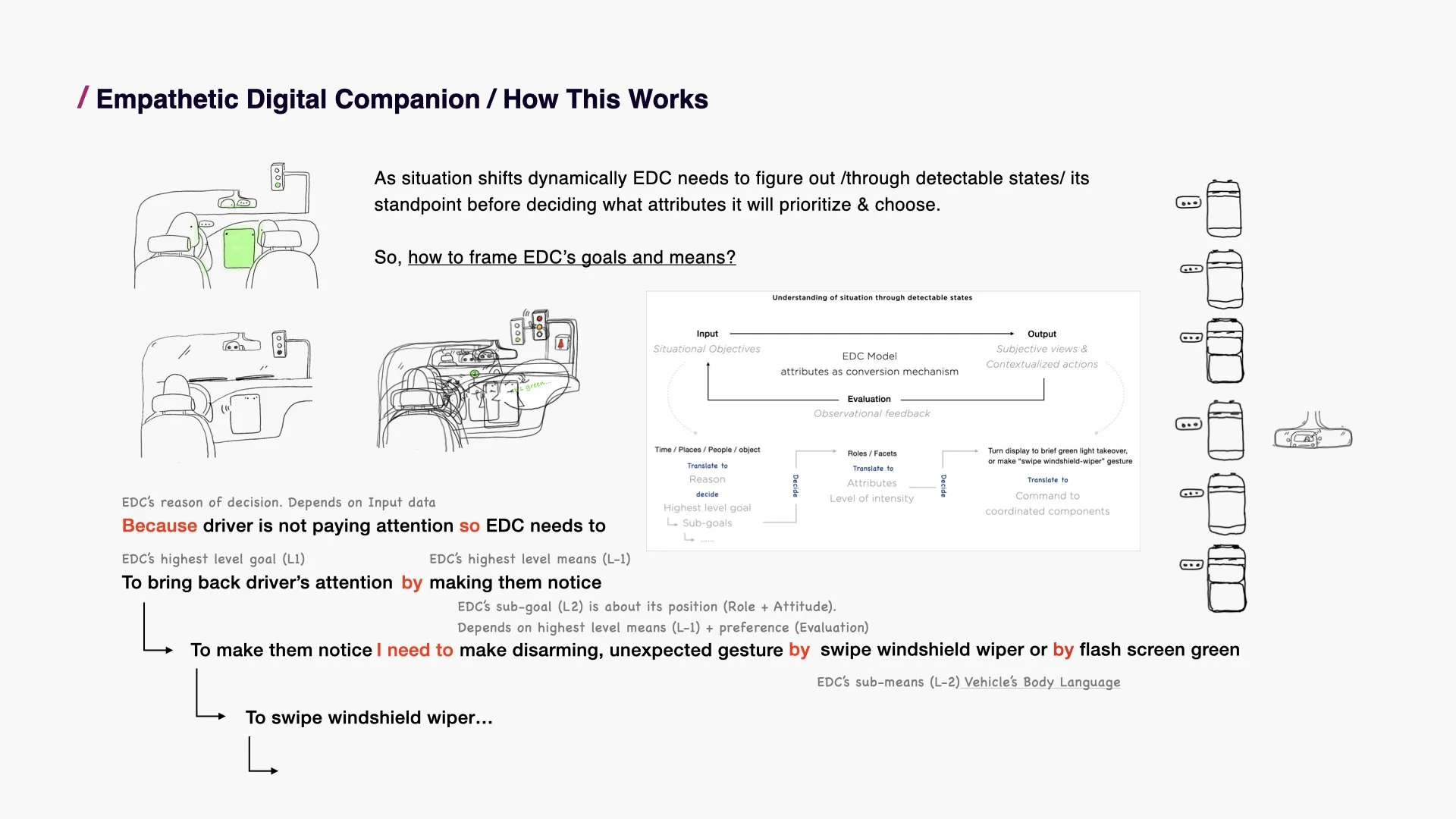
Making emerging design questions specific and inhabitable:
Experience Design needs to seek fresh ways to translate and reveal “the why” in the interplay with “what” and “how” of design situation.