Expressive Interaction
Expressiveness — the capacity to notice and acknowledge, briefly and appropriately, what is happening — is a design quality as important as accuracy, speed, or comprehensiveness.
Relationship between a person and an AI system, designed from this belief, can be worth having — not just useful to have.
I. The problem with the current model
Every AI system available today is organized around the same basic interaction model: you speak, it responds. You ask, it answers. You give a command, it executes.
This model is extraordinarily capable. Within it, AI systems have become remarkably good — at retrieving, reasoning, generating, translating, predicting. The scope of what they can do within the transaction has expanded faster than anyone anticipated.
But the transaction itself has not changed. The system waits to be addressed.
It responds to what is said to it, and remains indifferent to everything else — to what is happening in the room, to the emotional register of the moment, to the context surrounding the explicit request. The situation the person is in is, by design, outside the frame.
This was the right model for tools. It is an incomplete model for companions.
And companions are what AI systems are becoming — whether or not that is how they are being designed. They are present continuously. They know our patterns. They are with us in our most significant moments: in healthcare, in vehicles, in the spaces where we work and rest, in the moments in between, and make decisions that matter.
The question is not whether AI systems will be companions.
They already are. The question is what kind of companions they will be.
Expressions cause impressions. An expressive system generates a different quality of relationship, not just because it is more capable, but because it is more present.
III. Expressiveness as design quality
For a system to be attentive, it needs to be expressive: capable of communicating what it notices in ways that are appropriate to the moment.
Expressiveness is not the same as verbosity or eloquence. The most expressive response is often not a sentence. It is a pause, a gesture, a shift in modality, a brief nonverbal acknowledgment that says: I noticed what just happened.
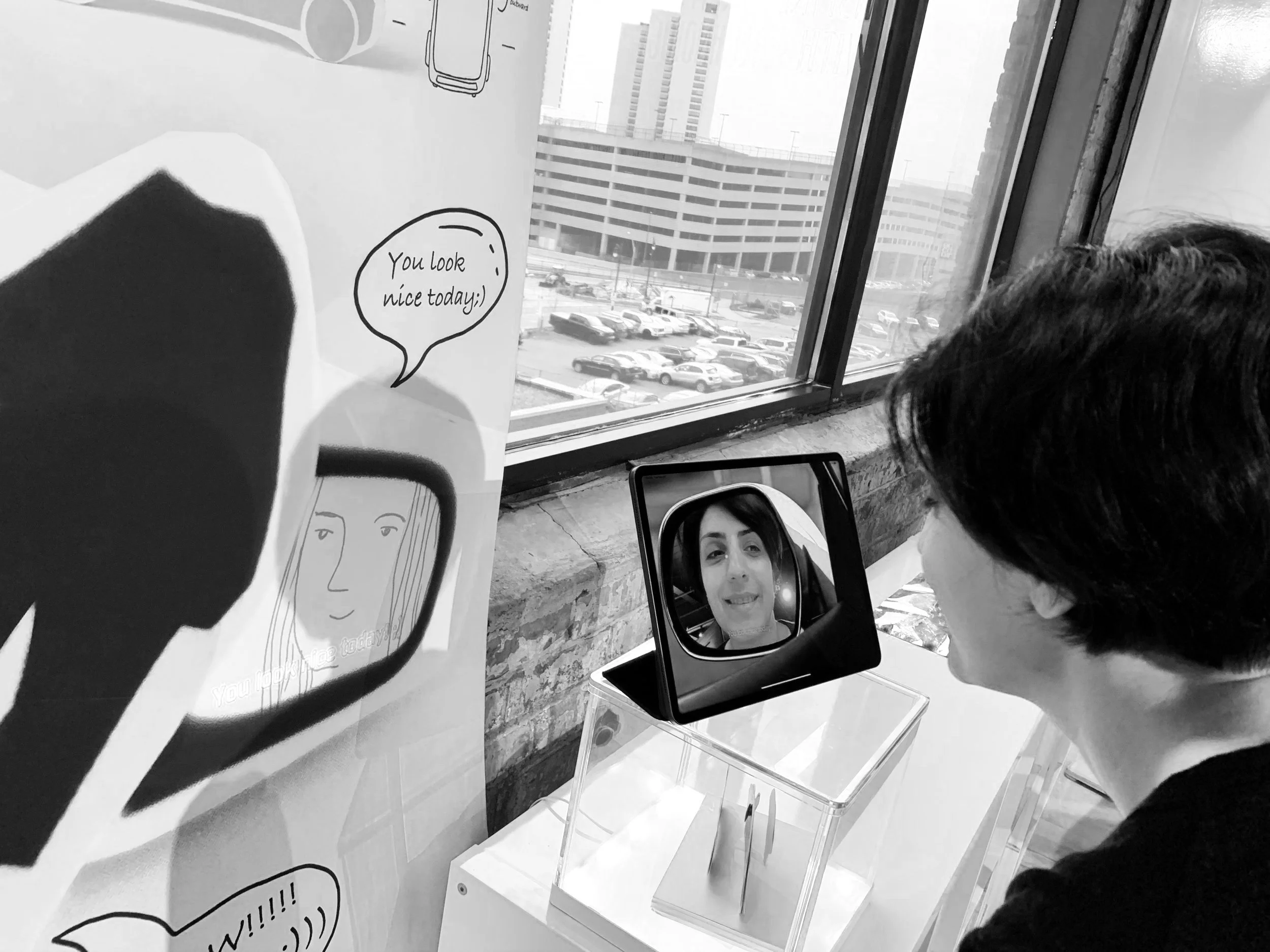
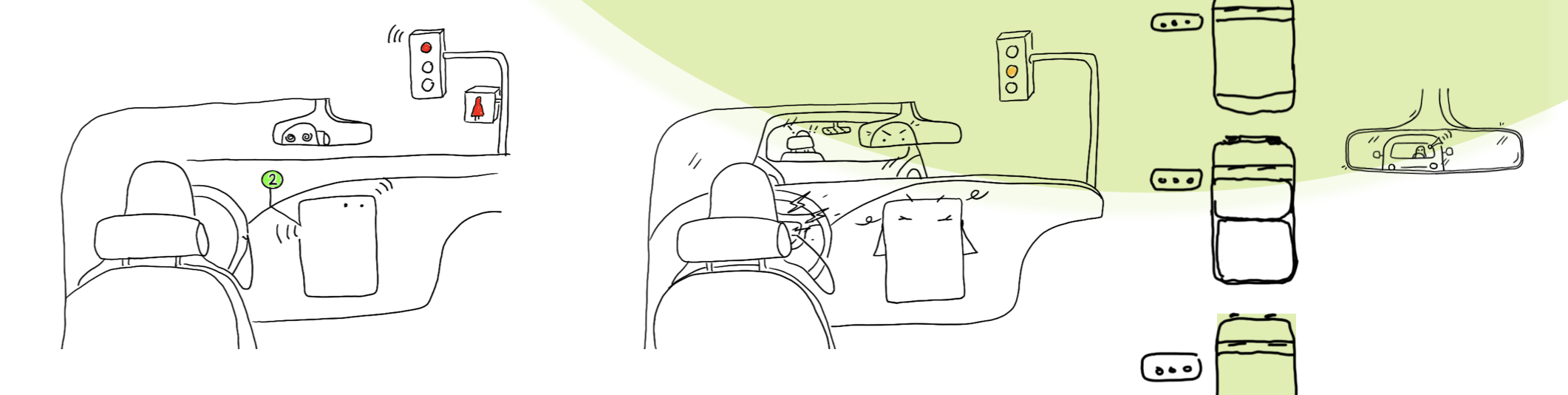
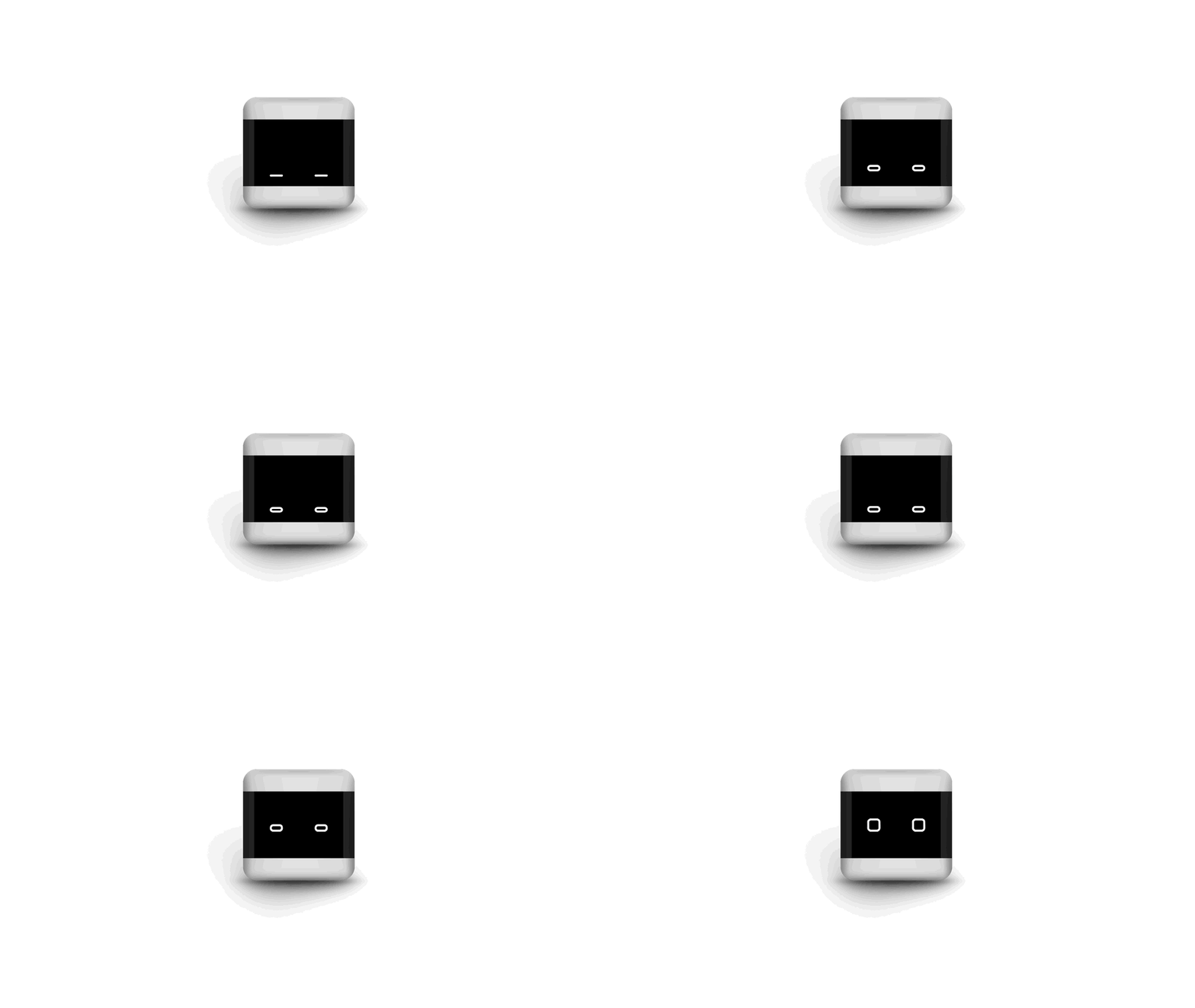
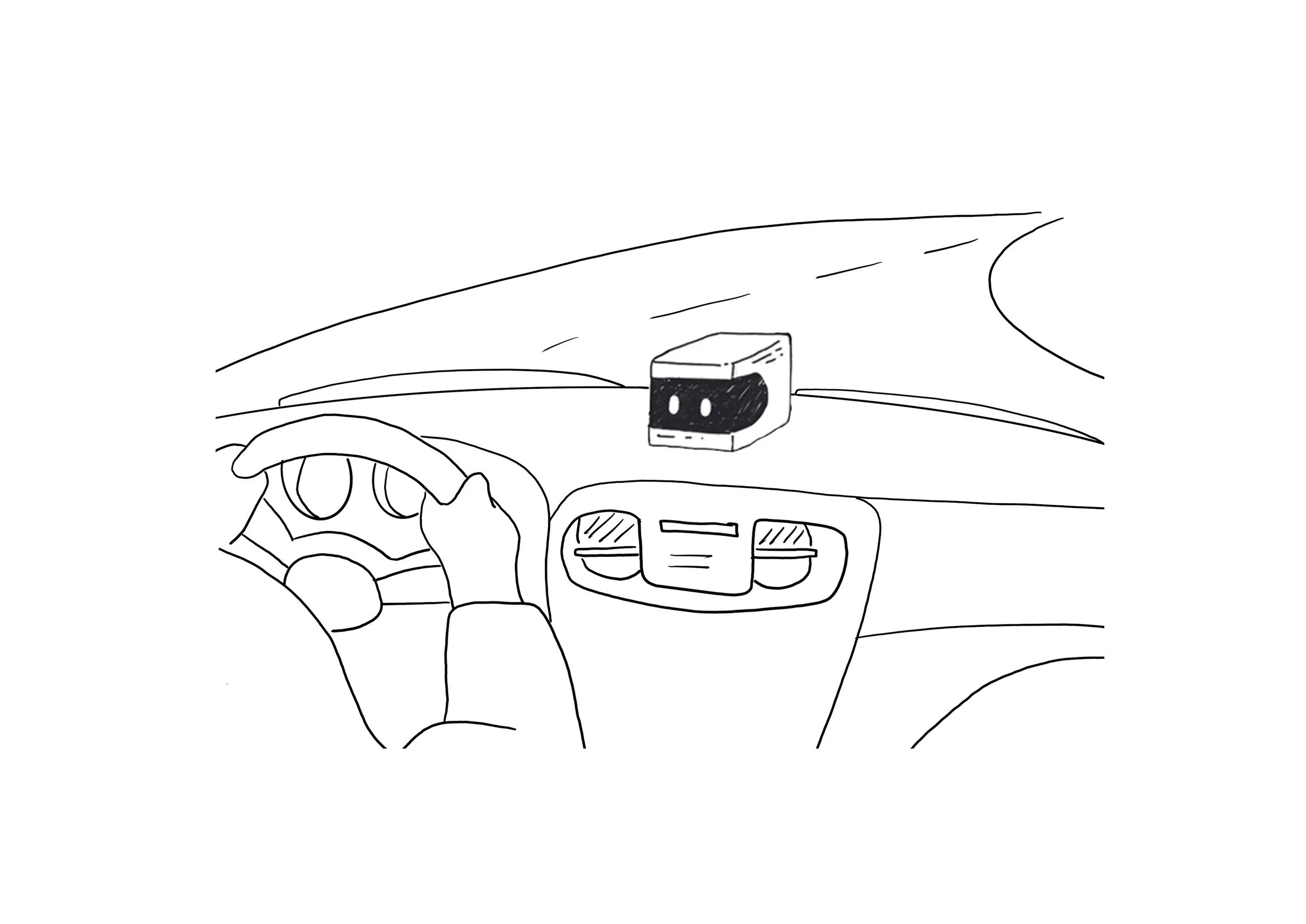
Our prototype Dash - a small object on a car's dashboard with eyes that respond to what the vehicle's sensors detect — is an exploration of this at its most minimal. When the car hits a pothole, Dash reacts. When rain starts on the windshield, it looks. When the traffic has been slow for twenty minutes, it
notices. It says nothing. It performs no task. It simply expresses what it is attending to, briefly, accurately, without demanding attention in return.
The effect is a different quality of presence. Not the presence of a tool that performs when commanded, but the presence of something that is paying attention.
Expressions cause impressions.
This is not a poetic claim. It is a design principle: a system that expresses what it notices creates a different relational context than one that does not.
The person inside that relationship experiences something different, not because the task was completed differently, but because the quality of attention felt different.

V. The design position
Expressive interaction is my belief that AI systems, and all truly adaptive, always-on technology, should be designed for attentiveness, not only for responsiveness.
That the full situation is the design brief, not only the stated task.
That expressiveness, the capacity to notice and acknowledge, briefly and appropriately, what is happening, is a design quality as important as accuracy, speed, or comprehensiveness.
And that the relationship between a person and an AI system, designed from this belief, can be worth having, not just useful to have.
→ See in the work:
Expressive Companion / Dash ·
Sound Compass ·
Care & Presence ·
Coming Home ·
Design question: What would it mean for an AI system to express what it notices, not only respond to what is asked?

II. The distinction that matters
There is a difference between a system that responds and a system that attends.
A system that responds answers when spoken to. It is transactional — accurate, efficient, and complete within the bounds of the exchange. It does exactly what was asked and nothing more.
A system that attends is present in a fuller sense. It notices the situation it is in, not only the command, but the context around the command. The person's tone. The time of day. The pattern of the last thirty minutes. The fact that the
same question has been asked three times in different forms. It does not necessarily say anything about what it notices. But its response is shaped by it, calibrated to the situation rather than only to the explicit request.
This distinction is not about making AI systems emotional. It is not about simulating warmth or performing empathy. It is about a specific design quality: attentiveness.
The capacity to be present to the full situation, not only to the stated task.
Attentiveness produces a different quality of interaction. Not louder or more elaborate, often quieter, more precisely calibrated. The system that notices you have been in traffic for forty minutes does not announce this. It simply adjusts the music, the light, the tone of its next response. The system that recognizes a frightened question in a healthcare context does not pivot to clinical efficiency. It holds the question differently.
These adjustments are small. Their cumulative effect on the relationship is not.
IV. Why this matters now
We are at a design inflection point with AI.
The interaction patterns being established right now. How AI systems present themselves, what they attend to, how they respond to context beyond the command, will become the defaults. They will be what people expect. They will shape what seems possible and what seems strange.
Most current AI design is optimized for capability within the transaction: more accurate, faster, more comprehensive. These are genuine improvements. But they do not address the design question that will define the long-term relationship between
people and AI systems: what kind of presence do these systems have in our lives?
A system that is only transactional, however capable, is a vending machine at scale. A system that is attentive, appropriately expressive, capable of noticing the situation it is in and responding to it as a social situation, and that is something different. Something closer to a genuine companion.
Designing for that difference is not a product feature. It is a design philosophy.
It requires asking different questions at the start of the process: not only what should this system do, but how should it be present? What should it notice? What should it express, and when, and in what register? What does it mean for this system
to be in this situation with this person?
These are the questions we are built to ask. They are the most important design questions of this moment in technology. And they have not yet been asked with the seriousness they deserve.